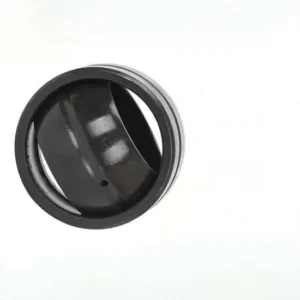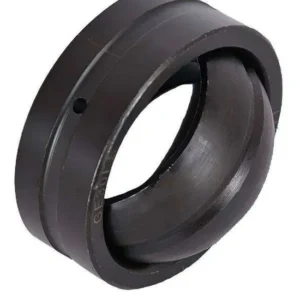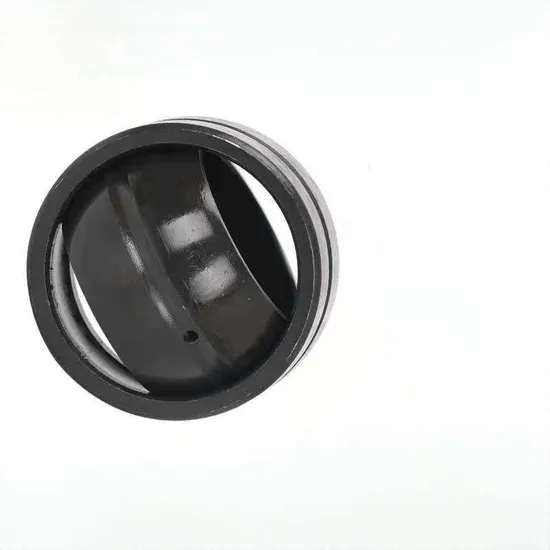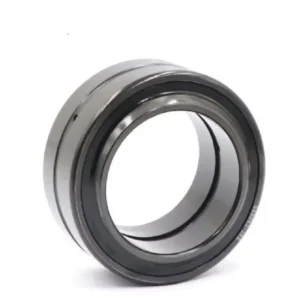

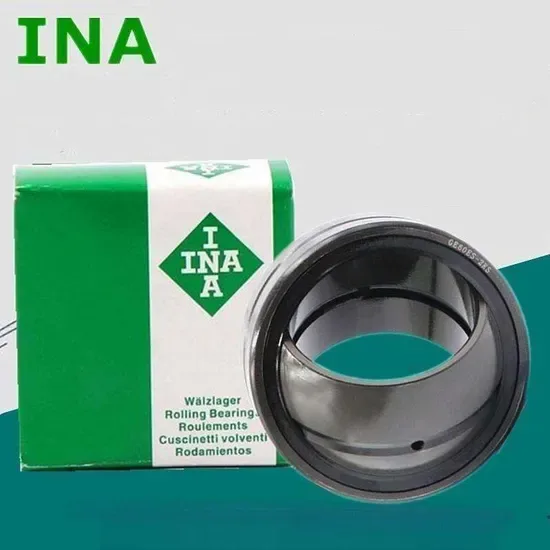
Description
Authorized Channel Sourcing — every INA GE15-DO-E spherical plain bearing ships with batch-linked Certificate of Conformity and traceable distributor documentation, so textile and industrial MRO buyers can confirm material grade and origin before the first oscillating cycle.
Technical Specifications
| Parameter | Value |
|---|---|
| Designation | INA GE15-DO-E |
| Bearing Type | Spherical Plain Bearing |
| Bore Diameter (d) | 15 mm |
| Ball Diameter | 22 mm |
| Eye Thickness | 12 mm |
| Body Material | Bearing Steel |
| Ball Material | Bearing Steel |
| Precision Class | P2 |
| Weight | 0.030 kg |
| Origin | China |
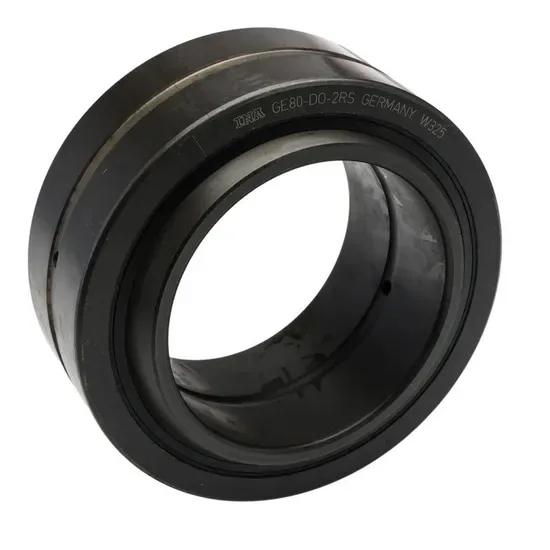
The suffixes "-DO" and "-E" appear on the nameplate but remain unverified against the current INA catalog; full decoding will be confirmed at the quotation stage.
Application Suitability
| Industry | Typical Applications |
|---|---|
| Textile machinery | Oscillating loom linkages, yarn guide pivot joints |
| Industrial linkages | Rod-end connections on pneumatic actuators |
| Hydraulic systems | Cylinder pivot eyes on mobile equipment |
| Agricultural equipment | Steering linkage joints on sprayer booms |
What a Material-Pairing Oversight Costs on a Textile Loom
A 15 mm steel-on-steel joint that receives a PTFE-lined substitute will score within months under dry oscillation.
Sourcing teams often match the base GE number and release the purchase order, only to discover later that the inner ring is wearing prematurely because the sliding contact surface was specified for a different lubrication regime [NEED_CITE: bearing substitution failure modes per ISO 15243]. When counterfeit bearings with soft inner rings enter the supply chain, the scoring noise on the factory floor is the first warning — by then, the linkage has already been running out of tolerance for weeks. The INA GE15-DO-E spherical plain bearing demands a verified steel-on-steel pairing, and that verification must happen before the batch leaves the warehouse, not after a loom shutdown.
Matching the INA GE15-DO-E to Oscillating Linkage Duty
Textile looms and pneumatic rod ends subject spherical plain bearings to slow oscillation under moderate radial load — a regime where full-film hydrodynamic lubrication never develops. The INA GE15-DO-E spherical plain bearing addresses this with bearing-steel-on-bearing-steel sliding surfaces that rely on boundary lubrication, typically greased at scheduled intervals. We once cross-referenced a loom pivot that had been running a PTFE-lined substitute; the liner wore through in eleven weeks because the application demanded steel-on-steel wear resistance, not low-friction polymer. Confirming the correct sliding material pairing before shipment is the reason we keep material certificates on file for every batch.
Oscillation, Load Reversal, and the Grease Interval Challenge
Slow-angle oscillation concentrates wear on a narrow arc of the raceway, and any reversal in load direction — common on hydraulic cylinder pivots — accelerates surface fatigue if the grease film is starved [NEED_CITE: oscillating bearing wear mechanism in plain bearings]. Ambient temperature in textile mills often reaches levels that thin conventional lithium-complex greases, shortening re-lubrication intervals. Because the GE15-DO-E is an open, re-lubricable design, maintenance teams control the grease type and frequency; the supplier’s responsibility is ensuring the bearing surfaces meet the declared hardness so the grease film can do its job.
Why P2 Precision Matters in a 15 mm Bore
P2 is the tightest ISO tolerance grade offered for spherical plain bearings, holding bore and ball diameter within narrow bands. In a compact 15 mm bore with a 22 mm ball diameter, even small deviations in sphericity translate into uneven contact pressure and localized wear tracks. Reaching P2 accuracy also keeps the eye thickness within tolerance, which matters when the bearing is pressed into a rod-end housing with limited axial adjustment. The steel-on-steel construction complements this precision by maintaining dimensional stability under load, unlike polymer-lined variants that compress and alter the effective clearance over time.
The Hidden Downtime Cost of an Unverified Slide Surface
Specifying the wrong sliding contact material or accepting a bearing with undocumented heat treatment leads to unplanned loom stoppages, scrap yarn from guide misalignment, and emergency air-freight orders for replacements. ISO 15243 classifies these outcomes under adhesive wear and surface fatigue — failure modes that are preventable when the material pairing and hardness are confirmed before installation [NEED_CITE: ISO 15243 adhesive wear classification]. A batch that fails prematurely also voids the OEM equipment warranty in many textile mills, shifting the full replacement cost onto the maintenance budget.
How We Keep the INA GE15-DO-E Traceable from Mill to Machine
We source this bearing through authorized distributor channels, so every shipment carries a supplier Certificate of Conformity tied to the production batch. Our cross-reference database checks not only the GE base number but also bore, ball diameter, eye thickness, and sliding material against the OEM specification — preventing the kind of suffix oversight I made early in my sourcing career on a 15 mm loom pivot. Material certificates confirm bearing-steel grade for both the body and the ball, and third-party dimensional inspections verify P2 running accuracy before the batch is crated. For import buyers, we prepare country-of-origin paperwork and HS code documentation so customs clearance does not stall the delivery.
Documentation & Authenticity
- Supplier Certificate of Conformity referencing the GE15-DO-E production batch and lot number
- Material certificate confirming bearing-steel grade for both inner and outer ring sliding surfaces
- Third-party dimensional inspection report verifying P2 bore and ball-diameter tolerances
- Country-of-origin certificate supporting import compliance for textile machinery spare parts
- HS code and shipping documentation package prepared for customs brokers in destination markets
Storage, Handling & Mounting
- Keep the GE15-DO-E sealed in its original anti-corrosion wrapping until the loom linkage is ready for assembly; the 15 mm bore is small enough that surface condensation can initiate micro-pitting within days
- Store below 40 °C and away from direct UV exposure to preserve the factory-applied rust-preventive oil on the steel-on-steel contact surfaces
- Use lint-free gloves when handling; the P2 precision bore is easily marred by embedded grit that would accelerate wear during the first oscillation cycles
- Press-fit the outer ring into the rod-end housing with a soft-metal drift, never hammering directly on the 22 mm ball, to avoid brinelling the raceway
- Apply the specified lithium-complex grease to the sliding surfaces immediately after mounting, because the open design leaves the steel-on-steel contact zone unprotected until the first grease purge
Requesting a Quotation with the Right Technical Detail
Share the oscillation angle, radial load, and re-greasing interval from your textile or hydraulic application so we can confirm the steel-on-steel pairing is suitable and flag any clearance or suffix questions. If you are replacing an existing joint, send the OEM equipment number or a photo of the nameplate; we will cross-reference bore, ball diameter, and eye thickness against our interchange database. Once the technical match is confirmed, we will issue a quotation that includes lead time, batch documentation, and country-of-origin paperwork for your import file.
Frequently Asked Questions
Q: How can I verify the authenticity of an INA spherical plain bearing before installation?
A: We supply a batch-linked Certificate of Conformity and material certificate with every shipment. You can also scan the QR code on the packaging through the brand’s official app to confirm the production lot matches the documentation we provide.
Q: What do the suffixes "-DO" and "-E" indicate on the GE15-DO-E?
A: These suffixes appear on the product nameplate but are not fully decoded in our current reference library. We will confirm their exact meaning against the manufacturer’s latest catalog and include the clarification in the quotation notes so there is no ambiguity at the time of order.
Q: How should I cross-reference this bearing if the OEM calls for a different brand?
A: Match bore diameter, ball diameter, eye thickness, and sliding contact material — not just the base GE number. Our interchange database aligns these four parameters across the major plain-bearing brands to prevent the kind of material-pairing mismatch that leads to premature scoring.
Q: What is the difference between steel-on-steel and PTFE-lined spherical plain bearings?
A: Steel-on-steel designs like the GE15-DO-E suit higher-load, slower-oscillation applications where boundary lubrication with grease is practical. PTFE-lined variants trade load capacity for lower friction and maintenance-free operation, but they wear faster under heavy oscillating loads.
Q: What documentation accompanies a bulk order for import?
A: Each bulk shipment includes the supplier COC, material certificates, third-party dimensional inspection reports, and country-of-origin documentation with the correct HS code to support customs clearance in your destination market.
Confirm the Steel-on-Steel Match for Your Next Loom Overhaul
Send us the OEM part number or the operating parameters of your oscillating joint, and we will return a verified cross-reference with full traceability paperwork.
Contact our sourcing desk through the inquiry form on this page or email sales@bearing-supplier.com.