
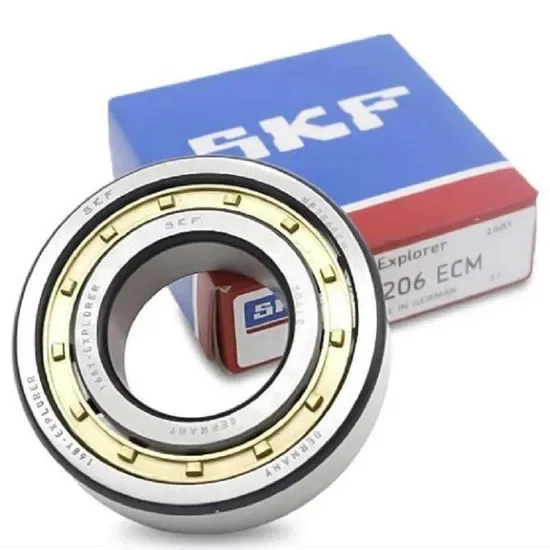

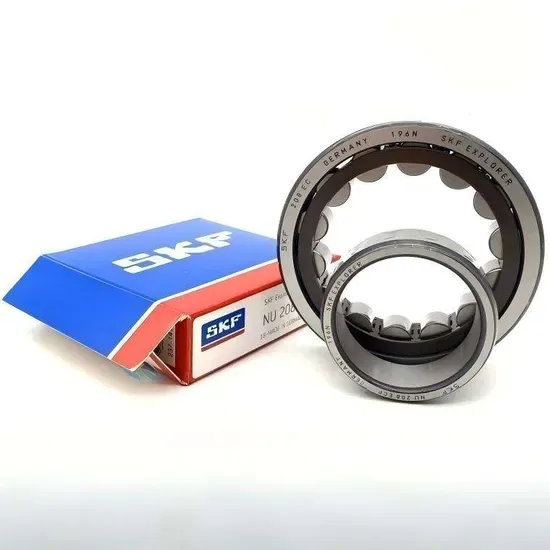


Description
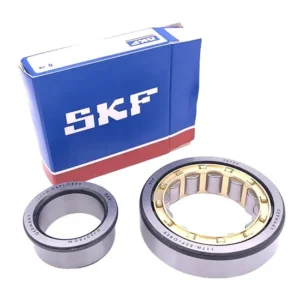
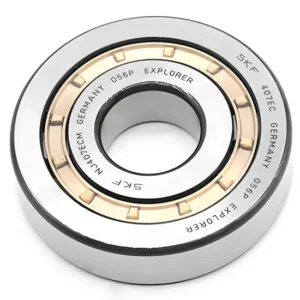
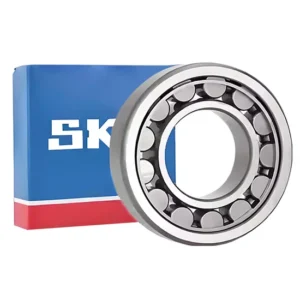
Authorized Channel Sourcing — Every N 1009 TN/SP super-precision cylindrical roller bearing we supply is backed by traceable procurement records from SKF authorized distributor networks, with batch-level documentation available for import verification.
Technical Specifications
| Parameter | Value |
|---|---|
| Designation | SKF N1009TN/SP |
| Bearing Type | Single Row Cylindrical Roller Bearing |
| Bore Diameter (d) | 45 mm |
| Outside Diameter (D) | 75 mm |
| Width (B) | 16 mm |
| Number of Rows | Single Row |
| Cage Material | Polyamide 6,6 (Glass Fiber Reinforced) |
| Seal or Shield Type | Open |
| Precision Class | SP |
| Bore Type | Cylindrical |
| Arrangement | N-type (flanges on inner ring, none on outer ring) |
| Origin | China |
| Weight | 0.250 kg |
Note: The /SP precision suffix indicates super-precision class per SKF nomenclature; specific dimensional and running accuracy tolerances should be confirmed against the current SKF super-precision bearing catalog for this exact production batch.
Application Suitability
| Industry | Typical Applications |
|---|---|
| Industrial machinery | High-speed spindle nose positions, precision gear shafts |
| Electric motors | Traction motor armature shafts requiring tight radial runout control |
| General MRO | Replacement bearings for CNC lathe headstock assemblies |
What Happens When SP Precision Gets Ignored on a Spindle Rebuild
A suffix is never just a suffix — it defines the thermal and dimensional boundary of the entire spindle system.
I watched a Bavarian workshop scrap an entire spindle assembly because the replacement bearing matched the base N1009 designation but lacked the /SP precision class. The standard-grade substitute ran within tolerance for roughly two weeks before thermal expansion closed the internal clearance completely. Cage smearing followed, then shaft scoring. The downtime and replacement cost dwarfed what a correct SP-class bearing would have cost upfront [NEED_CITE: rolling bearing failure mode classification per ISO 15243]. Counterfeit bearings with soft inner rings and cloned QR codes only compound this problem, entering supply chains through unverified middlemen and failing to hold dimensional stability under sustained high-speed operation. A procurement decision based solely on the base number — without cross-checking precision suffix, cage material, and clearance — is a deferred failure waiting to manifest on the shop floor.
Matching the N1009TN/SP to Spindle and Motor Demands
The SKF N1009TN/SP cylindrical roller bearing is engineered for positions where radial rigidity and low friction must coexist at elevated speeds. Its N-type arrangement allows the outer ring to float axially in the housing bore, accommodating thermal shaft growth without inducing preload — critical when a spindle warms from ambient to operating temperature across a shift. The polyamide cage keeps weight low at the rolling element interface, reducing centrifugal forces that would otherwise limit attainable speed in traction motor armature positions. When we cross-reference an OEM equipment number against this designation, we verify that the clearance, cage, and precision class all align with the original specification — not just the bore and outside diameter.
Thermal, Speed, and Lubrication Realities on the Shop Floor
In spindle and gearbox environments, this bearing typically operates under predominantly radial loads with minimal axial component, relying on the adjacent angular contact pair to handle thrust. Speeds in the upper range demand oil-air or oil-mist lubrication to manage heat generation at the roller-cage pocket interface, since the open design requires an external lubrication circuit rather than sealed-for-life grease packs. Operating temperature directly affects the internal radial clearance: if the shaft-to-housing temperature gradient exceeds typical values, a standard CN clearance may close to zero, generating the kind of thermal binding that destroys cages [NEED_CITE: effect of thermal gradient on bearing internal clearance in machine tool spindles]. Housing and shaft seat tolerances must match SP-class requirements — a loose shaft fit invites creep, while an overly tight fit preloads the bearing from the start. Mounting by induction heater requires temperature discipline; overheating the inner ring risks tempering the raceway and degrading the very precision the SP suffix guarantees.
Decoding the Cage and Precision Choices
The TN suffix designates an injection-molded, glass-fiber-reinforced polyamide 6,6 cage — a deliberate choice for high-speed applications where cage weight and lubricant film thickness at the pocket-roller contact govern attainable speed. Compared to machined brass cages, polyamide cages operate quieter, generate less friction heat, and tolerate brief starved-lubrication events without immediate galling. The trade-off is a lower maximum continuous operating temperature and incompatibility with certain synthetic lubricants that attack nylon over time. The SP precision class places this bearing in SKF’s super-precision tier, where bore and OD tolerances, radial runout, and width variation are held tighter than standard P6 or P5 grades — essential when the bearing sits in a spindle nose where a few microns of runout translate directly into workpiece surface finish errors. The open seal type means contamination control is the responsibility of the housing seal system, not the bearing itself, which keeps friction low but demands clean oil supply and effective external sealing in dusty or wet environments.
The Hidden Expense of a Wrong-Grade Substitution
Correct specification paired with a verifiable supply chain protects against unplanned downtime that no unit-price saving can justify. A bearing that matches the bore and OD but lacks SP precision may physically install without issue, then introduce vibration and runout that accelerate seal wear on adjacent components and degrade machining accuracy [NEED_CITE: relationship between bearing running accuracy and machined surface finish per ISO 281 life framework]. Counterfeit bearings with case-hardened raceways that fail to reach proper core hardness can spall within months under loads a genuine part would endure for years. When a failure triggers catastrophic shaft damage, the cost cascade — scrapped tooling, emergency freight, missed delivery deadlines — makes the original procurement savings irrelevant. ISO 15243 failure classification shows that a significant share of premature failures trace back to selection or sourcing errors rather than manufacturing defects in genuine components.
What Verification Looks Like Before Shipment
Our sourcing model runs through authorized distributor channels, which means every SKF N1009TN/SP cylindrical roller bearing arrives with procurement chain documentation rather than a generic invoice. We maintain a cross-reference database that checks clearance, cage material, and precision suffix simultaneously — not just the base number — so substitution errors are caught before the purchase order is issued. When an OEM drawing calls for a competing brand’s equivalent, we map the full designation including suffixes and flag any mismatch in cage type or precision grade before quoting. Batch-level traceability connects the bearing in your receiving inspection back to the authorized distributor transaction, giving your quality team a paper trail that satisfies ISO 9001 audit requirements and import compliance checks.
Documentation & Authenticity
- Supplier Certificate of Conformity referencing the specific batch number tied to authorized distributor procurement records for this N1009TN/SP shipment
- Country-of-origin documentation supporting customs clearance and import tariff classification under the applicable HS code for cylindrical roller bearings
- QR code verification pathway through the SKF Authenticate app, allowing receiving inspection to confirm genuine packaging and production batch alignment
- Dimensional inspection report covering bore diameter, OD, and width tolerances consistent with SP super-precision class expectations
- Material certification confirming bearing steel composition and heat treatment compliance for the rings and rollers
Storage, Handling & Mounting
- Retain original SKF sealed packaging until the moment of mounting; premature exposure risks moisture ingress on the open-type raceways and polyamide cage absorption of ambient humidity
- Induction heating of the inner ring for mounting on the spindle shaft should not exceed manufacturer-recommended temperatures, as overheating compromises the SP-class dimensional accuracy of the bore
- Shaft seat tolerance must be verified with a micrometer before pressing; an undersized shaft will cause inner ring creep under the high radial loads this N-type arrangement transmits, while an oversized shaft preloads the rollers and eliminates the designed internal clearance
- Clean oil supply and effective housing labyrinth seals are mandatory for this open bearing in any environment with airborne particulates, since the polyamide cage offers no built-in contamination barrier
- Store horizontally in climate-controlled conditions to prevent cage deformation under the bearing’s own weight and protect the polyamide material from UV degradation
Request a Technical Review Before You Commit
Share your operating parameters — speed, load spectrum, lubrication method, and housing seal configuration — so we can confirm the N1009TN/SP is the correct designation for your application rather than a close-but-wrong substitute. If you are replacing an existing bearing, provide the OEM equipment number or the full marking from the removed unit so our cross-reference check covers clearance, cage, and precision in one pass. We can prepare a documentation package with batch traceability and country-of-origin papers for your import compliance review before you issue a purchase order. Lead time and availability vary by production batch; confirming current stock against authorized distributor channels ensures realistic scheduling for your maintenance window.
Frequently Asked Questions
Q: How can I verify that a received SKF N1009TN/SP is genuine and not a counterfeit clone?
A: SKF provides the Authenticate app, which allows you to scan the QR code on the packaging and cross-check it against the manufacturer’s database. Beyond app verification, genuine super-precision bearings show consistent laser-engraved markings on the ring face, and the polyamide cage should display clean molding without flash or discoloration. We supply bearings with authorized distributor procurement records that trace the unit back through the supply chain.
Q: What does the SP precision class mean in practical terms for my spindle application?
A: SP is SKF’s super-precision designation, indicating tighter dimensional tolerances and running accuracy than standard precision grades. For spindle nose positions, this translates to lower radial runout, which directly influences workpiece surface finish and tool life. The exact tolerance values should be confirmed against the current manufacturer catalog for the specific production batch.
Q: Should I choose a polyamide cage or brass cage for high-speed spindle operation?
A: For the N1009TN/SP, the TN polyamide cage is already optimized for high-speed operation — its lower mass reduces centrifugal loading on the roller-cage pockets, enabling higher attainable speeds than a brass equivalent. Brass cages are preferred when operating temperatures exceed polyamide limits or when the lubricant is chemically incompatible with nylon materials.
Q: How do I cross-reference this SKF bearing to NSK, FAG, or TIMKEN equivalents?
A: Cross-referencing requires matching not just the base N1009 designation but also the cage material (polyamide), precision class (SP or the competing brand’s equivalent), and bore type. A mismatch in any of these parameters — such as substituting a standard-precision bearing or a brass-cage version — changes the speed capability and thermal behavior. We run full suffix-level cross-checks across all six brands we cover.
Q: What documentation do I need for importing this bearing into my country?
A: Import requirements typically include a Certificate of Conformity, country-of-origin certificate, and correct HS code classification for customs. We prepare these documents from authorized distributor records and can format them to match your local customs authority’s requirements before shipment.
Verify Your N1009TN/SP Specification With Us
Send your OEM equipment number or operating parameters, and we will return a full cross-reference check with batch availability and documentation package preview — no purchase commitment required.