
Description
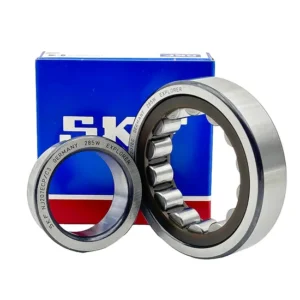
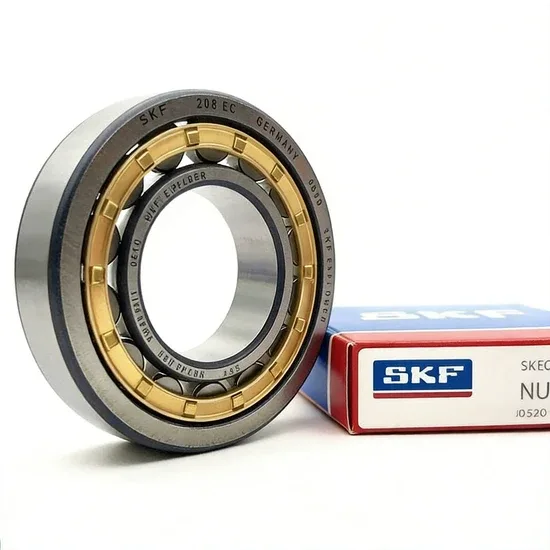
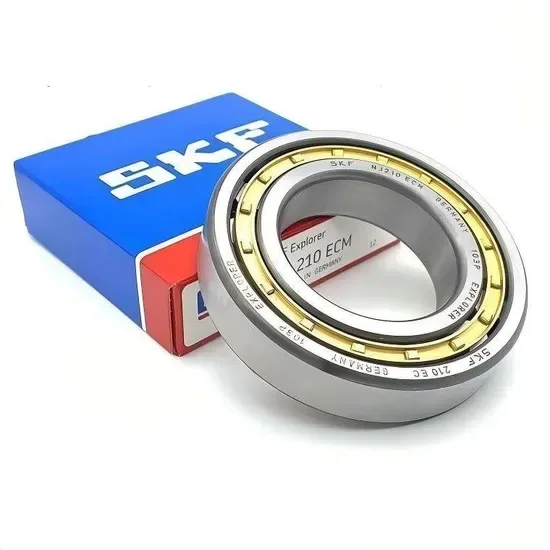
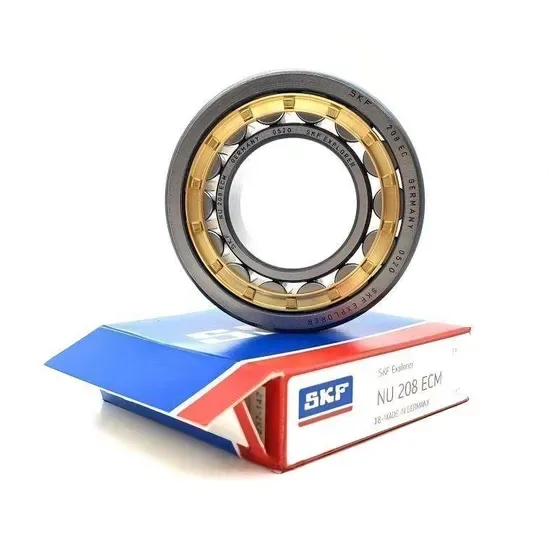
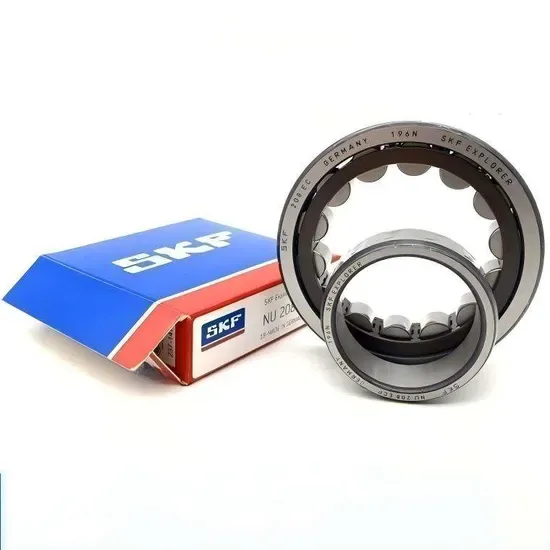
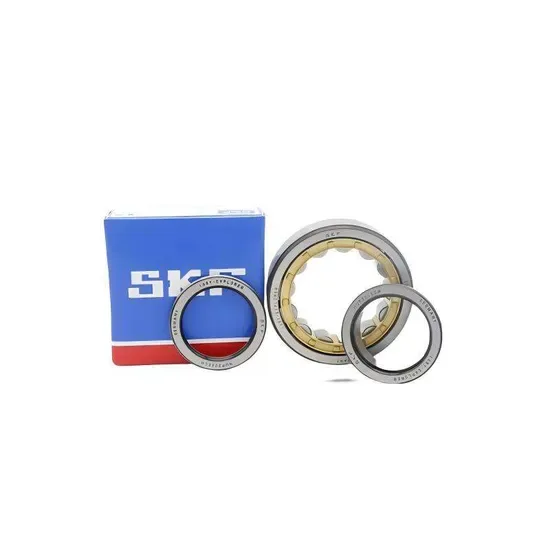
SKF NN 3018 TN3/SP Double Row Cylindrical Roller Bearing Wholesale
Batch-Traceable Precision Sourcing — Every SKF NN 3018 TN3/SP double row cylindrical roller bearing we supply ships with verifiable authorized-channel documentation and origin certification for hassle-free import clearance.
Technical Specifications
| Parameter | Value |
|---|---|
| Designation | SKF NN 3018 TN3/SP |
| Bearing Type | Double Row Cylindrical Roller Bearing |
| Bore Diameter (d) | 90 mm |
| Outside Diameter (D) | 140 mm |
| Weight | 1.9 kg |
| Number of Rows | Double Row |
| Structure | Cylindrical |
| Seal or Shield Type | Open |
| Cage Material | TN3 (source value — verify against manufacturer catalog) |
| Precision Class | SP |
| Origin | China |
| Material | Bearing Steel |
Note: The TN3 cage suffix and SP precision designation require verification against the official SKF catalog to confirm exact material composition and ISO tolerance equivalence; TN9 is the standard SKF polyamide cage for cylindrical roller bearings.
Application Suitability
| Industry | Typical Applications |
|---|---|
| Machine Tool Manufacturing | Lathe headstock spindle rear support, precision boring bar quill |
| Industrial Gearbox Production | High-rigidity gearbox intermediate shaft, planetary carrier support |
| Steel and Metallurgy | Rolling mill work roll neck, continuous caster guide roller |
| Material Handling | Overhead crane hoist drum shaft, conveyor drive reducer |
When a Precision Suffix Becomes the Difference Between Spindle Runout and Scrap Batches
An SP-grade cylindrical roller bearing exists specifically to hold radial runout within a tighter envelope than standard P0 tolerances allow.
On a paper mill winding spindle in Dubai, we once watched a standard CN-clearance NN3018 thermally bind within a week of commissioning. The shaft expanded under sustained heat from the drying section, and the bearing had nowhere to accommodate that growth — it seized the journal and scored the housing bore. The root cause was not bearing quality but a suffix mismatch on the original purchase order [NEED_CITE: thermal expansion effects on bearing internal clearance and seizure risk]. When machine tool builders or gearbox OEMs specify an SKF NN 3018 TN3/SP double row cylindrical roller bearing, they are calling for tighter dimensional control on bore and outside diameter, plus running accuracy that keeps spindle nose deflection predictable under cutting loads. Substituting a standard-precision part saves margin on paper but generates warranty claims that dwarf the unit price difference.
How This Bearing Earns Its Place in Precision Spindles
A double-row cylindrical roller arrangement handles the radial cutting forces that dominate lathe and grinding spindle duty cycles while leaving axial location to a paired angular contact or thrust bearing. The 90 mm bore and 140 mm outside diameter of the SKF NN 3018 TN3/SP double row cylindrical roller bearing place it squarely in the mid-range spindle segment — heavy enough for rigid turning centers, compact enough for multi-tasking machines with tight housing envelopes. When procurement engineers cross-reference this model against competing brands, we align not only the base dimensions but also the precision class and cage design, because a polyamide cage changes the permissible speed envelope and the thermal stability ceiling compared to a machined brass alternative.
Spindle Thermal Profiles and What They Demand
Machine tool spindles run hot. Front bearing temperatures routinely sit 15 °C to 25 °C above ambient after a two-hour warm-up cycle, and that gradient across the housing dictates how much radial expansion the inner ring and roller set must absorb without preload collapse. An open-type bearing like this one relies on the spindle housing’s own seal arrangement — typically a labyrinth or contact lip seal — which shifts contamination defense responsibility to the machine builder but eliminates the friction penalty of integrated seals [NEED_CITE: spindle bearing seal arrangement tradeoffs between friction and contamination ingress]. Oil-air or oil-jet lubrication cycles through the roller set, carrying heat away and replenishing the film that prevents roller-to-cage pocket wear. If the application instead runs grease-packed, the re-lubrication interval shrinks and the thermal ceiling drops.
Decoding the Designation That Matters
The NN prefix signals that both inner and outer rings have integral flanges guiding the rollers on both sides, which is what gives this series its characteristic radial rigidity — essential when a grinding wheel or milling cutter applies intermittent radial shock. The SP precision class sits above P5 in the SKF tolerance hierarchy, meaning bore and OD dimensional tolerances, plus radial runout of the assembled bearing, fall within a band tighter than standard production [NEED_CITE: SKF super-precision bearing tolerance classes SP and UP definition]. For the cage, the TN3 suffix appears to designate a polyamide material variant; however, because SKF’s standard cylindrical roller cage catalog predominantly lists TN9 for glass-fiber-reinforced polyamide 66, the TN3 marking warrants a direct catalog lookup to confirm whether it indicates a different polymer blend, a manufacturer-specific variant, or a legacy designation still valid for certain production batches.
The Downtime Arithmetic No One Budgets For
Dropping a non-SP bearing into a spindle rated for SP precision does not announce itself on day one. It announces itself at month three, when the operator notices chatter marks on the workpiece surface and the maintenance team traces the vibration signature back to excessive radial runout at the rear bearing seat. Under ISO 15243 failure classification, this registers as fatigue initiated by uneven load distribution — a subset of failures that could have been avoided with correct precision matching at procurement [NEED_CITE: ISO 15243 rolling bearing damage and failure classification]. The unplanned spindle teardown then cascades into lost production shifts, expedited replacement freight, and re-grinding of the housing bore if the inner ring spun on the journal. Sourcing the SKF NN 3018 TN3/SP double row cylindrical roller bearing through verified authorized channels eliminates the counterfeit risk that introduces soft inner rings incapable of holding interference fit under thermal cycling.
What Sourcing Through Verified Channels Actually Delivers
We do not hold single-brand distributorships; instead, we purchase through authorized SKF distributor networks and retain the full chain-of-custody paperwork that proves where each bearing was manufactured and through which warehouse it passed. For every SKF NN 3018 TN3/SP double row cylindrical roller bearing we ship, the documentation package includes a Certificate of Conformity tied to the specific batch and lot number, a dimensional inspection report confirming bore, OD, width, and runout fall within SP tolerance bands, and country-of-origin certification ready for customs presentation. When buyers need to cross-reference this model against an NSK or FAG equivalent for dual-source qualification, we generate a comparison table that aligns precision grade, cage material, and clearance class — not just the base 3018 number — so the substitution does not silently downgrade running accuracy. Our technical team also fields post-installation questions on interference fit values and warm-up procedure, because a precision bearing that is pressed on cold without calculating residual clearance has already started its life in a compromised state.
Documentation & Authenticity
- Supplier Certificate of Conformity referencing the exact lot number of the NN 3018 batch, traceable back to the SKF authorized distributor invoice.
- Dimensional inspection report confirming bore diameter, outside diameter, and radial runout values within the declared SP precision envelope before dispatch.
- Country-of-origin certificate specifying the manufacturing plant country, formatted for customs clearance in Middle East, African, and Latin American import jurisdictions.
- Material certificate identifying bearing steel grade (typically 100Cr6 or equivalent) and heat treatment condition of rings and rollers.
- Batch and lot traceability sheet allowing end users to cross-reference the bearing marking against the manufacturer’s production records via official verification channels.
- HS code and import classification guidance to accelerate customs processing and reduce demurrage risk at destination ports.
Storage, Handling & Mounting
- Keep the SKF NN 3018 TN3/SP in its original sealed packaging until the moment of spindle assembly; premature exposure to shop-floor humidity risks surface corrosion on the precision-ground raceways.
- Store horizontally on a flat shelf in a climate-controlled area below 60% relative humidity to prevent false brinelling of the roller-to-raceway contact zones during extended inventory holds.
- When mounting, use induction heating to expand the inner ring to the calculated temperature for the specified interference fit — cold pressing an SP-precision 90 mm bore onto the spindle journal risks galling and raceway distortion.
- Verify shaft journal diameter and roundness with a calibrated micrometer before assembly; an out-of-round journal will transfer its geometry error directly into the bearing bore, negating the SP precision advantage.
- Because this is an open-type bearing, confirm that the spindle housing seals are intact and the oil-air or oil-jet lubrication lines are flushed and functional before closing the housing cover.
- Wear clean, lint-free gloves during handling to prevent fingerprint acids from initiating corrosion on the polished roller surfaces before the lubricant film is established.
Request Technical Review Before You Commit
Share your spindle operating parameters — radial load profile, maximum continuous speed, housing seal type, and lubrication method — so our technical team can confirm whether the SKF NN 3018 TN3/SP double row cylindrical roller bearing clearance and cage combination matches your thermal envelope. If you are replacing an existing bearing, provide the OEM equipment number or the full designation printed on the current bearing marking so we can cross-verify the precision class and cage material before quoting. We will also confirm batch availability and typical lead times against current authorized-channel stock, so you can plan your spindle rebuild window without guessing.
Frequently Asked Questions
Q: How can I verify that the SKF NN 3018 TN3/SP I receive is genuinely sourced through authorized channels?
A: Every unit we supply carries a batch and lot number that you can cross-reference with SKF’s official verification pathways, including QR code scanning where supported. We provide the full chain-of-custody documentation from our authorized distributor purchase through to your delivery, including the Certificate of Conformity tied to that specific production lot.
Q: What does the SP precision suffix mean in practical terms for a double row cylindrical roller bearing?
A: SP is a super-precision class defined by SKF that specifies tighter dimensional tolerances on bore and outside diameter, plus stricter radial runout limits, compared to standard P0 or P5 grades. In spindle applications, this translates to lower vibration signatures and more predictable workpiece surface finish under load.
Q: Is the TN3 cage suffix interchangeable with the more commonly listed TN9 designation?
A: TN3 and TN9 both indicate polyamide-based cage materials, but they may differ in polymer composition or glass-fiber reinforcement percentage. We recommend confirming the exact cage specification against the manufacturer’s current catalog before treating them as direct substitutes, especially for applications running near the upper speed or temperature limit.
Q: How do you handle cross-reference matching when I need a second-source equivalent for this bearing?
A: Our cross-reference comparison aligns not just the base 3018 series number but also the precision class, cage material, clearance, and bore type across SKF, NSK, FAG, TIMKEN, NTN, and KOYO. This ensures the substitute bearing meets the same running accuracy and thermal performance requirements as the original specification.
Q: What import documentation do you provide for overseas shipments of precision bearings?
A: We supply a country-of-origin certificate, HS code classification, Certificate of Conformity, material and dimensional inspection reports, and any additional import-compliance paperwork required by the destination country’s customs authority, reducing clearance delays and demurrage risk at your port.
[Confirm Your Spindle Rebuild Specification Today]
Send us your OEM equipment number, application parameters, or the full bearing marking from the unit you are replacing — we will return a technical verification and availability confirmation within one business day.
[Contact via Alibaba inquiry or direct message through our storefront]