

Description
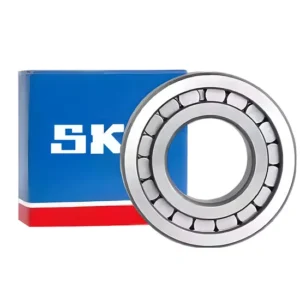
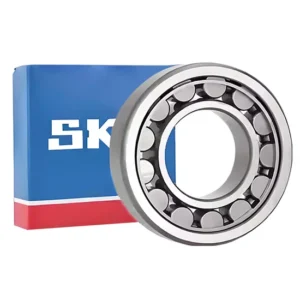
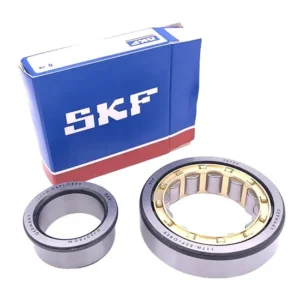
Authorized Channel Sourcing — Batch-level traceability confirms the SKF NNU4920BK/SPW33 originates from verified production facilities, with origin documents supporting customs clearance across Gulf and CIS import corridors.
Technical Specifications
| Parameter | Value |
|---|---|
| Designation | SKF NNU4920BK/SPW33 |
| Bearing Type | Double Row Cylindrical Roller Bearing |
| Bore Diameter (d) | 100 mm |
| Outside Diameter (D) | 140 mm |
| Number of Rows | Double |
| Structure | Cylindrical |
| Bore Type | Tapered (1:12 taper) |
| Seal or Shield Type | Open |
| Precision Class | SP / UP |
| Lubrication Feature | W33 — Annular groove with three lubrication holes in outer ring |
| Origin | China |
The /SP precision designation aligns with super-precision tolerances; confirm whether SP or UP class is required for your spindle application before finalizing the order.
Application Suitability
| Industry | Typical Applications |
|---|---|
| Machine tool manufacturing | High-speed lathe and grinding spindle rear support |
| Steel and metallurgy | Rolling mill work roll and backup roll neck journals |
| Industrial gearboxes | Precision gear train intermediate shaft support |
| General MRO | Replacement spindles in retrofit CNC equipment |
What Happens When the Bore Taper and Precision Class Are Overlooked on a Super-Precision Cylindrical
A base-number match without suffix verification can lock a spindle solid within weeks of commissioning.
I once supplied double-row cylindricals to a steel mill in the Gulf where the purchasing team confirmed the NNU49 series and bore size, but the cross-reference sheet listed CN clearance instead of C3. The tapered bore also required a specific interference fit class that the installation crew didn’t verify. Six weeks into production, thermal expansion eliminated internal clearance entirely — the rollers seized, the spindle scored, and the mill went down for an unplanned overhaul. That failure traced back to a single line on a substitution table that nobody double-checked [NEED_CITE: rolling bearing failure mode classification per ISO 15243]. The SKF NNU4920BK/SPW33 demands the same discipline: every suffix — K, /SP, W33 — must align with the actual shaft geometry, thermal profile, and re-lubrication plan.
Matching the Spindle Envelope to Continuous High-Speed Duty
The SKF NNU4920BK/SPW33 fits machine tool spindles and precision rotating shafts where radial rigidity and minimal runout dictate part quality. The 100 mm tapered bore seats directly on a matched journal, allowing the installer to drive the inner ring up the taper and set residual clearance precisely — no adapter sleeve introducing runout error. We’ve cross-referenced this designation against competing catalogs to confirm that bore taper, W33 lubrication routing, and SP-class tolerances all transfer correctly, not just the base number. When a buyer sends us an OEM equipment plate number, we verify whether the original specification called for /SP or the tighter /UP class, then confirm cage type and clearance before quoting.
Thermal Growth, Lubrication Routing, and Mounting Interference
Spindle housings in grinding and milling machines experience uneven thermal gradients — the front bearing runs hotter than the rear, and the shaft expands axially under cutting loads. A double-row cylindrical at the non-locating end must accommodate that growth without binding. The open seal type here is intentional: contact seals would generate friction heat at spindle speeds, so the housing itself manages contamination through labyrinth seals or air purge systems. Re-lubrication flows through the W3*the roller path, avoiding the need to dismount for grease replenishment [NEED_CITE: cylindrical roller bearing re-lubrication intervals under continuous spindle duty]. The tapered bore demands controlled drive-up during mounting — too little interference and the inner ring creeps under load; too much and residual clearance collapses.
Decoding the Suffix Stack: K, /SP, and W33
The K suffix confirms a 1:12 tapered bore, which pairs with a precision-ground tapered shaft seat to achieve uniform interference without an adapter sleeve — critical when SP-class running accuracy is on the line. The /SP designation places this bearing in the super-precision tier, meaning dimensional tolerances and running accuracy exceed standard P5 but stop short of /UP, which tightens bore and OD tolerances further. For most CNC lathe rear spindle positions, /SP provides adequate runout control; front positions under heavy radial cutting forces sometimes demand /UP. The W33 feature — an annular groove with three equally spaced lubrication holes in the outer ring — is not cosmetic. Without it, grease must travel around the full circumference from a single housing port, creating starved zones at high speed. With W33, lubricant enters the load zone directly through three paths, maintaining film thickness across the roller-raceway contact.
The Financial Drain of a Suffix Mismatch
Correct specification plus verified provenance yields predictable L10 life. The alternative is a cascade of hidden costs: a bearing with the right base number but wrong clearance class fails prematurely under thermal load, triggering unplanned downtime that dwarfs the component price [NEED_CITE: ISO 281 bearing life calculation framework for dynamic equivalent load]. Counterfeit cylindricals with soft inner rings may pass visual inspection but spall under spindle loads, sending metallic debris through the gearbox. A misquoted precision class introduces runout that degrades surface finish, forcing the operator to scrap parts until the root cause surfaces. Warranty claims on equipment damaged by unverified bearings are routinely denied, shifting the entire repair cost to the end user.
Why Procurement Engineers Route Precision Orders Through This Desk
Every SKF NNU4920BK/SPW33 we quote is sourced through authorized distributor channels — not gray-market surplus with clipped lot numbers. Batch traceability travels with the shipment: Certificate of Conformity, lot code, and QR verification pathway via the SKF official app. Our cross-reference database aligns bore taper, precision suffix, cage material, and W33 lubrication features simultaneously, so substitution between SKF, NSK, FAG, NTN, TIMKEN, and KOYO is validated on engineering parameters, not just the base designation. We provide country-of-origin documentation upfront because Gulf and CIS customs authorities increasingly demand it at the port of entry. When an application involves unusual thermal profiles or non-standard shaft fits, we review the mounting envelope and recommend clearance adjustments before the purchase order is finalized. Dimensional inspection reports covering bore taper angle and SP-class runout are available for pre-shipment review.
Documentation & Authenticity
- Supplier Certificate of Conformity tied to the exact batch and lot number of your SKF NNU4920BK/SPW33 shipment
- QR code verification pathway through the SKF official app for on-site authenticity confirmation at your receiving dock
- Third-party dimensional inspection report validating the 1:12 bore taper angle and SP-class running accuracy before dispatch
- Country-of-origin certificate and HS code classification to support import clearance in GCC and CIS jurisdictions
- Material certificate confirming bearing steel composition and heat treatment compliance with relevant ISO standards
Storage, Handling & Mounting
- Keep the SKF NNU4920BK/SPW33 sealed in original packaging until the spindle housing is prepped and clean — premature exposure in a humid workshop risks corrosion on the precision-ground raceways
- Store flat on a shelf, never standing on edge; the 140 mm OD and double-row roller set create enough mass to deform the packaging and nick the outer ring if dropped
- Before mounting, verify the tapered shaft seat with a ring gauge or precision indicator to confirm the 1:12 taper matches — a mismatched seat will drive the inner ring to full interference before the correct residual clearance is achieved
- During installation, measure the axial drive-up distance and correlate it to residual internal clearance; over-driving the tapered bore eliminates the clearance needed for thermal expansion during spindle operation
- Route re-lubrication lines to the W33 outer ring groove before final housing closure — attempting to connect grease lines after assembly often requires partial teardown
Request a Technical Review Before Ordering
Share your spindle speed range, operating temperature profile, and shaft fit specifications so we can confirm whether /SP or /UP precision and which internal clearance class serve your application. If you’re replacing an existing bearing, send the OEM equipment number or the full designation from the nameplate — we’ll cross-reference the bore taper, precision suffix, and W33 lubrication feature to ensure full interchange. Ask for the documentation package and origin confirmation at the inquiry stage, not after the order is placed.
Frequently Asked Questions
Q: How do I verify the authenticity of an SKF NNU4920BK/SPW33 after delivery?
A: Each bearing carries a QR code linked to its production batch. Scan it using the SKF official app to retrieve manufacturing origin, date code, and specification match. We also provide a Certificate of Conformity with lot traceability that you can cross-check against the brand’s authorized distribution records.
Q: What does the /SP precision suffix mean compared to P4 or P5?
A: The /SP designation falls within the super-precision range, offering tighter dimensional and running accuracy than standard P5. It is commonly specified for machine tool spindle applications where radial runout affects surface finish. The tighter /UP class is available when the spindle position demands even lower runout values.
Q: What are the mounting guidelines for the K tapered bore?
A: The 1:12 taper allows the inner ring to be driven axially onto a matched tapered shaft seat, creating a firm interference fit without an adapter sleeve. The installer must measure the axial drive-up distance and correlate it to the residual internal clearance — over-driving eliminates clearance and causes thermal binding once the spindle reaches operating temperature.
Q: When is the W33 lubrication feature required, and how should re-lubrication be performed?
A: W33 is specified when continuous operation demands reliable re-lubrication without dismounting the bearing. The annular groove and three lubrication holes in the outer ring distribute grease or oil directly into the roller path. Connect lubrication lines to the housing ports aligned with the groove before closing the housing.
Q: How do I cross-reference this bearing to other brands?
A: A valid cross-reference must match the tapered bore (K suffix), SP-class precision, and W33 lubrication feature — not just the base NNU4920 designation. We verify all three parameters across SKF, NSK, FAG, NTN, TIMKEN, and KOYO catalogs before confirming interchangeability.
Secure Your Spindle Specification
Send us the OEM equipment number or your operating parameters — speed, temperature, and shaft fit details — to initiate the technical review. Our engineering desk will return a cross-reference match, clearance recommendation, and full documentation package within one business day.