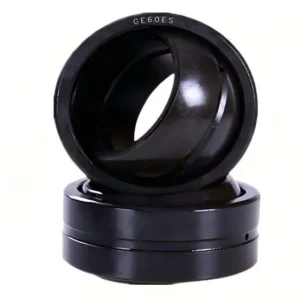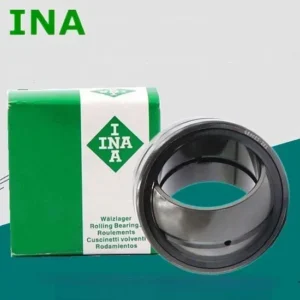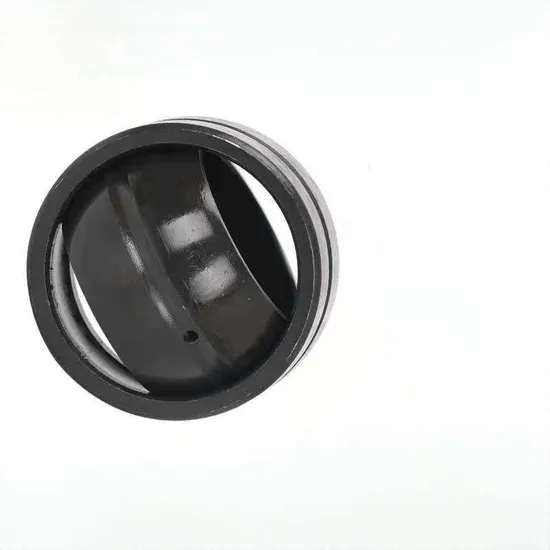

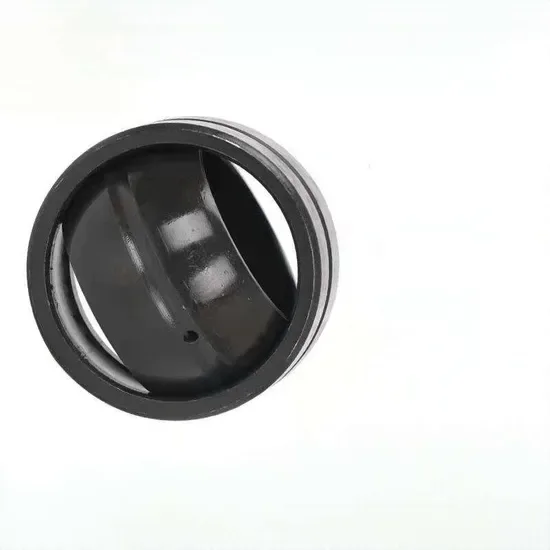
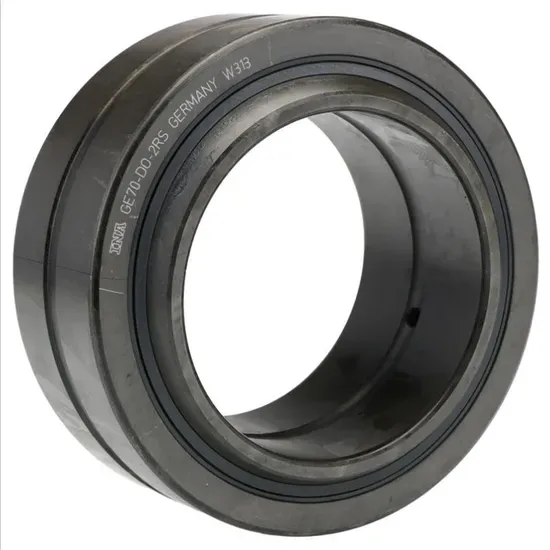
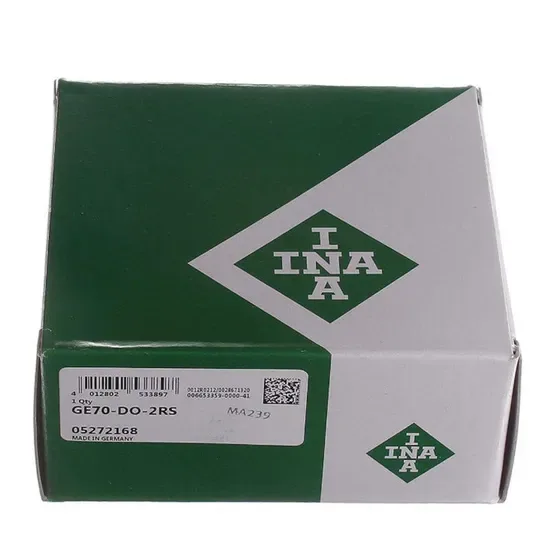

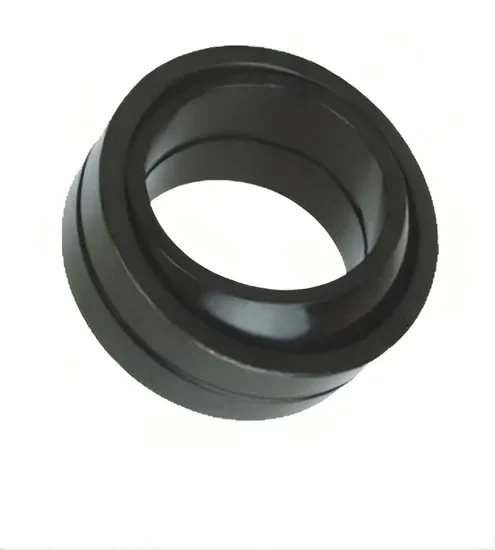
Description
Batch-Traceable Sourcing — Every GE45-DO-E spherical plain bearing ships with a Certificate of Conformity tied to its production lot, ensuring material and dimensional accountability from mill to machine.
Technical Specifications
| Parameter | Value |
|---|---|
| Designation | generic GE45-DO-E |
| Bearing Type | Spherical Plain Bearing |
| Bore Diameter (d) | 45 mm |
| Outside Diameter (D) | 68 mm |
| Width (B) | 32 mm |
| Ball Diameter | 60 mm |
| Precision Class | P2 |
| Ball Material | Bearing Steel |
| Body Material | Bearing Steel |
| Origin | China |
The suffixes DO and E appearing in this identifier remain unverified against a specific manufacturer catalog; exact design intent should be confirmed with the original equipment documentation or brand technical service before final specification lock-in.
Application Suitability
| Industry | Typical Applications |
|---|---|
| Textile Machinery | Loom linkage pivot points, warp beam oscillating arms |
| Industrial Machinery | Conveyor transfer arms, packaging machine toggle joints |
| Material Handling | Forklift mast tilt cylinder eyes, crane boom pivot pins |
| Agricultural Machinery | Harvester header linkage joints, sprayer boom articulation points |
What Happens When a Plain Bearing’s Contact Surface Gets Specified Wrong
A steel-on-steel pairing that matches the actual oscillation profile prevents the kind of thermal seizure that shuts down an entire production line.
Early in my career on the procurement side at a textile plant in Vietnam, a supplier cross-referenced a 45 mm bore spherical plain bearing by dimension alone and shipped PTFE-lined units where steel-on-steel was required. The oscillating motion in the loom linkage generated friction heat that melted the liner within weeks, and the bearings seized solid. Two full days of lost output followed. The root cause was never the bore size — it was the sliding contact surface material, specified without anyone asking what the machine actually demanded [NEED_CITE: spherical plain bearing material pairing selection guidance per ISO 12240].
Matching the GE45-DO-E to Oscillating Textile and Industrial Linkages
The GE45-DO-E spherical plain bearing pairs a bearing steel inner ring against a bearing steel outer ring, creating a hardened sliding interface built for the slow oscillation and heavy static loads typical of loom linkages and toggle mechanisms. Where PTFE-lined alternatives rely on a thin polymer film that degrades under sustained boundary friction, this steel-on-steel design tolerates the repeated directional reversals and shock loads common in weaving and packaging equipment. The 45 mm bore and 68 mm outside diameter fit standard GE-series mounting envelopes, so replacement into existing housings requires no modification. We routinely cross-check these dimensional envelopes against OEM equipment numbers to confirm fitment before a quote leaves the desk.
Load, Speed, and Lubrication Realities in the Field
Textile linkage joints rarely spin — they oscillate through partial arcs at low speed under significant radial load, which means the bearing operates almost entirely in the boundary lubrication regime. Heat buildup is less a function of rotational velocity and more a consequence of contact pressure and oscillation frequency. The steel-on-steel interface demands a reliable grease supply at regular intervals; without it, metal-to-metal contact accelerates wear past any acceptable threshold [NEED_CITE: boundary lubrication requirements for oscillating spherical plain bearings]. Temperature in these applications typically stays within ambient-plus-friction ranges, so thermal expansion of the housing is manageable, but contamination from cotton fiber dust and sizing agents can infiltrate the sliding zone if external sealing is neglected.
How P2 Precision and Steel Construction Shape Performance
P2 precision sits at the top of the ISO tolerance stack for plain bearings, meaning bore and outside diameter tolerances are held to the tightest available band. In a loom linkage where the pivot geometry governs shed accuracy, even marginal play translates into fabric defects across long production runs. The bearing steel construction — typically GCr15 or 100Cr6 equivalent — delivers surface hardness in the HRC 58–62 range after through-hardening, which resists the micro-pitting that softer counterfeit rings exhibit after only a few thousand oscillation cycles. The 32 mm eye thickness provides sufficient axial engagement for the pin or shaft, distributing load across a broad contact patch rather than concentrating stress at the ring edges.
The Hidden Price of a Bearing That Wasn’t What You Ordered
A counterfeit inner ring machined from low-carbon steel might pass a caliper check on bore diameter, but its soft surface will groove under load and lose the geometric accuracy the machine depends on. When that happens mid-run, the cost isn’t just the bearing — it’s the unplanned downtime, the scrapped material in the machine at the moment of failure, and the secondary damage to adjacent components forced out of alignment. ISO 15243 classifies these outcomes under wear and plastic deformation, both of which trace back to material substitution rather than normal fatigue [NEED_CITE: rolling bearing failure mode classification per ISO 15243]. Sourcing from a verified channel with traceable documentation closes this gap before the bearing ever reaches the shaft.
How We Close the Gap Between Inquiry and Installed Confidence
Every GE45-DO-E we source moves through authorized distributor channels, and each shipment carries batch-level traceability so you can match the physical bearing to its production record. Our cross-reference process doesn’t stop at the base designation — we verify bore, outside diameter, eye thickness, and sliding surface material together, because a single mismatched parameter is enough to cause a field failure. When your application involves unusual oscillation angles, contamination exposure, or load profiles outside standard catalog assumptions, we provide selection guidance grounded in the actual operating conditions rather than a generic chart. Country-of-origin documentation accompanies every order, smoothing import clearance without last-minute surprises at the port.
Documentation & Authenticity
- Supplier Certificate of Conformity referencing the specific batch and lot number of the GE45-DO-E units in your shipment
- Material certificate confirming bearing steel composition (GCr15 / 100Cr6 equivalent) for both inner and outer rings
- Dimensional inspection report verifying 45 mm bore, 68 mm OD, and 32 mm eye thickness against stated tolerances
- Country-of-origin documentation prepared for import compliance at destination
- HS code classification support to align with your customs broker’s filing requirements
Storage, Handling & Mounting
- Keep the GE45-DO-E in its original sealed packaging until the day of installation; early exposure to humid workshop air promotes surface corrosion on the unlubricated steel-on-steel contact faces
- Store below 35 °C and away from direct sunlight to preserve any factory-applied rust-preventive coating on the 68 mm outer ring
- Use clean cotton or nitrile gloves during handling — bare skin acidity accelerates localized corrosion on the P2-precision bore surface
- Apply a fresh coat of EP grease to the steel sliding surfaces before pressing onto the shaft, since the as-delivered preservative film is not a running lubricant
- During mounting, support the outer ring evenly to avoid brinelling the raceway; the 45 mm bore should be a light press fit onto a shaft ground to the recommended h6 or g6 tolerance
Ready to Confirm Fitment for Your Application?
Share your OEM equipment number or operating parameters — oscillation angle, load magnitude, relubrication interval — and we’ll return a cross-reference verification with full documentation scope. If the DO and E suffix designations require clarification against a specific brand catalog, we’ll flag that before quoting so there are no surprises downstream.
Frequently Asked Questions
Q: How do I confirm the GE45-DO-E is the correct replacement for my equipment?
A: Provide the OEM equipment number or the original bearing’s full designation including any suffixes. We verify bore diameter, outside diameter, eye thickness, and sliding surface material together — not just the base number — and return a cross-reference comparison so you can confirm interchangeability before committing to an order.
Q: What is the difference between steel-on-steel and PTFE-lined spherical plain bearings, and when should each be used?
A: Steel-on-steel designs like the GE45-DO-E handle higher static and shock loads but require periodic relubrication. PTFE-lined versions eliminate maintenance in low-load, low-speed applications but fail prematurely when contact pressure or oscillation frequency exceeds the polymer film’s capacity. For textile loom linkages under sustained load, steel-on-steel is almost always the correct choice.
Q: What precision class does P2 represent, and is it necessary for my application?
A: P2 is the tightest ISO tolerance class for plain bearings, holding bore and OD dimensions to the narrowest deviation band. Applications where pivot geometry directly affects product quality — such as warp positioning in weaving machinery — benefit from this level of accuracy. General-purpose linkages in material handling may function adequately at P6 or P0, reducing cost without sacrificing service life.
Q: How can I verify the authenticity and traceability of the bearings I receive?
A: Each shipment includes a Certificate of Conformity with batch and lot numbers, a material certificate confirming bearing steel grade, and a dimensional inspection report. We also provide country-of-origin documentation and QR code verification pathways where applicable, so your receiving team can validate the product against its paperwork before it enters inventory.
Q: Can the GE45-DO-E be substituted with an equivalent from another brand?
A: Cross-brand interchange is possible when bore, OD, eye thickness, and sliding surface material all align. We maintain comparison data across major manufacturers and will confirm whether a given alternative matches your application requirements on all four parameters, not just the base designation.
Confirm Your GE45-DO-E Specification and Lead Time
Send us your application parameters or OEM equipment number, and we’ll respond with a verified cross-reference, documentation package scope, and confirmed availability window. Contact our engineering team to start the review.