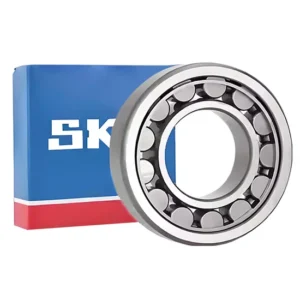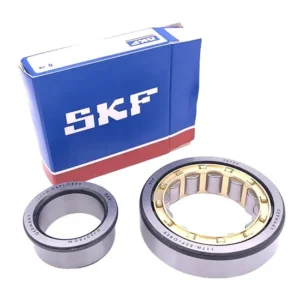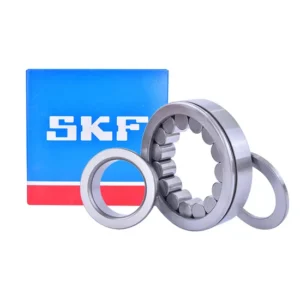
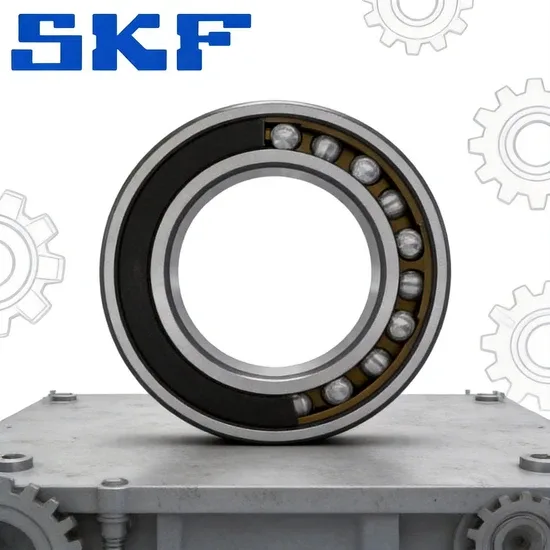


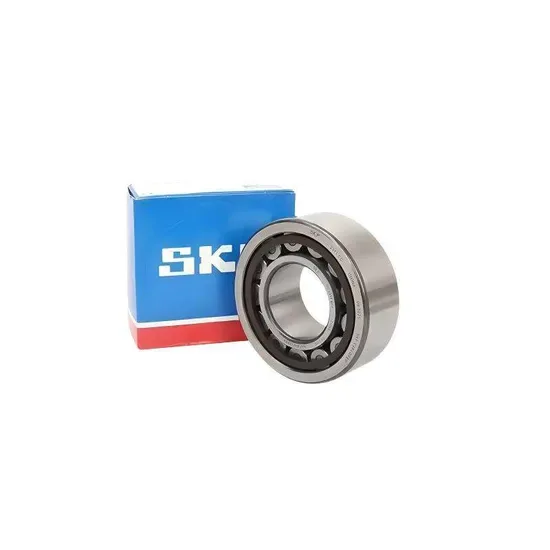
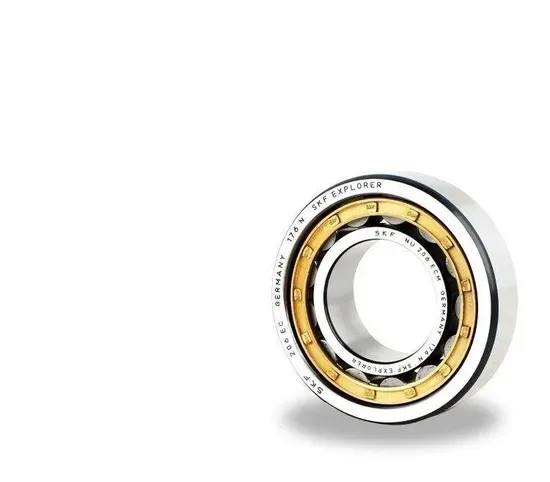
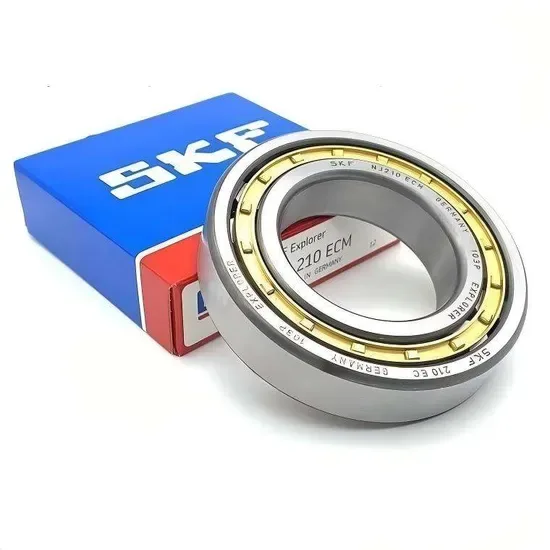
Description
Authorized Channel Sourcing — Batch traceability and certificate of conformity accompany every N10 series shipment from the manufacturer’s production facilities to your spindle rebuild bench.
Technical Specifications
| Parameter | Value |
|---|---|
| Designation | SKF N1014KPHA/HC5SPVR592 |
| Bearing Type | Super-precision single row cylindrical roller bearing |
| Bore Diameter (d) | 70 mm |
| Outside Diameter (D) | 110 mm |
| Width (B) | 20 mm (source value — verify against manufacturer catalog for PHA variant) |
| Bore Type | Tapered 1:12 |
| Number of Rows | Single Row |
| Precision Class | SP |
| Seal or Shield Type | Open |
| Material | Bearing Steel |
| Weight | 0.56 kg |
| Origin | China |
Note: Suffixes PHA, HC5, and VR592 are unverified variants requiring manufacturer catalog confirmation for exact cage material, ceramic roller content, or special internal clearance codes before final procurement commitment.
Application Suitability
| Industry | Typical Applications |
|---|---|
| Machine Tool Manufacturing | High-speed milling spindle rear support, precision grinding wheel head |
| Industrial Automation | High-frequency rotary table indexing drive, direct-drive motor rotor support |
| Aerospace Component Machining | Turbine blade profile grinding spindle, composite drilling head |
What a Precision Mismatch Costs on a 18,000 RPM Spindle
Matching the bore and OD is not enough — the suffix defines whether the spindle survives the first shift.
I spent years clearing bearings through Jebel Ali customs before moving to the technical side, and that shift changed how I view precision parts. A client in Dubai once rebuilt a CNC spindle using an N10 cylindrical roller bearing cross-referenced from a competitor brand, matching only the bore and outside diameter. The original specification called for P4 precision with a specific tapered bore tolerance; the substitute arrived at P5 with a looser interference fit. At elevated speeds, the inner ring slipped on the shaft journal, generated heat within minutes, and the spindle seized mid-cut — scrapping a six-figure machining contract. That incident cemented a rule I follow on every quote: suffix-level cross-reference is non-negotiable. Counterfeit cylindrical roller bearings entering the supply chain through unverified middlemen often carry soft inner rings and cloned QR codes that pass a casual visual check but fail under thermal load [NEED_CITE: rolling bearing failure mode classification per ISO 15243]. The SKF N1014KPHA/HC5SPVR592 super-precision cylindrical roller bearing demands exact alignment of taper tolerance, cage design, and precision class to function reliably in its intended application.
Aligning the SKF N1014KPHA/HC5SPVR592 with Spindle Load Spectra
This bearing targets the rear support position of high-speed milling and grinding spindles, where radial stiffness must remain consistent across thermal cycles while axial displacement is managed by a separate thrust arrangement. The single row cylindrical roller geometry handles the dominant radial cutting forces with minimal friction, allowing the spindle to sustain speed without excessive heat generation at the roller-raceway contact. Our cross-reference database maps this designation against equivalent NSK and FAG spindle variants, verifying not just the base number but the clearance, cage material, and running accuracy suffix — so procurement engineers can substitute confidently when lead times on the primary brand extend beyond acceptable windows.
Thermal Expansion and Lubrication Realities in Spindle Housings
Spindle housings experience uneven thermal growth during continuous cutting cycles, which compresses the bearing radially and demands a specific internal clearance strategy. Oil-air or oil-mist lubrication systems feed directly into the open bearing cavity, carrying away friction heat while maintaining a thin elastohydrodynamic film between rollers and raceways [NEED_CITE: spindle bearing lubrication methods for high-speed machining]. The tapered bore allows the inner ring to be driven axially onto the spindle journal during assembly, creating a precise interference fit that eliminates micro-slip at elevated rotational velocities. Ambient temperature swings in the workshop — from cold morning startups to sustained afternoon thermal equilibrium — further dictate how much residual clearance must remain after mounting to prevent preload-induced thermal runaway.
Decoding the Suffix Logic Behind Spindle Reliability
The K suffix confirms a tapered bore with a 1:12 ratio, enabling direct mounting onto a matching tapered spindle journal where the axial drive-up distance controls the internal radial clearance reduction. The SP precision class places dimensional accuracy in the ISO Class 5 band while tightening running accuracy beyond standard P5 tolerances — critical for minimizing radial runout that would otherwise transfer directly into workpiece surface finish errors. The PHA and VR592 suffixes point toward specialized cage geometry and internal configuration that the manufacturer’s catalog must confirm before we commit to bulk quantities. The open seal type is deliberate for this application: high-speed spindles rely on externally managed oil-air systems, and any integrated contact seal would introduce friction heat incompatible with sustained operation above typical grease speed limits.
The Hidden Expense of Unverified Interchange Substitutes
Selecting a replacement based solely on bore and OD dimensions while ignoring cage material, precision suffix, and taper tolerance produces failures that rarely appear in the first hour of operation. Micro-slip at the shaft interface builds gradually, elevating housing temperature until the lubricant film degrades and roller skidding initiates surface spalling [NEED_CITE: bearing failure progression from lubricant breakdown to surface fatigue]. Unplanned downtime on a five-axis machining center extends well beyond the replacement bearing cost — scrapped aerospace forgings, missed delivery penalties, and emergency air freight for replacement spindles accumulate rapidly. ISO 281 life calculations assume correct mounting and adequate lubrication; neither assumption holds when the interference fit is compromised by an overlooked suffix.
Why Maintenance Engineers Route Spindle Inquiries Here
We source this SKF N1014KPHA/HC5SPVR592 super-precision cylindrical roller bearing through authorized distributor channels with batch and lot traceability intact from the manufacturer’s production line. Every shipment carries a Certificate of Conformity linked to the specific production batch, enabling verification through the official brand application’s QR code pathway before the bearing leaves its packaging. Our cross-reference comparison extends past the base designation to confirm cage material, precision class, and internal clearance alignment across SKF, NSK, FAG, and NTN catalogs — preventing the exact mismatch scenario that destroyed the Dubai spindle. Country-of-origin documentation accompanies each order for import compliance, and dimensional inspection reports confirm SP-class running accuracy before dispatch.
Documentation & Authenticity
- Supplier Certificate of Conformity with production batch and lot number traceable to the manufacturer’s authorized distribution channel.
- QR code verification pathway through the official brand mobile application for authenticity confirmation at the receiving dock.
- Third-party dimensional inspection report confirming SP running accuracy tolerances prior to shipment.
- Country-of-origin certificate formatted for customs clearance in destination markets across the Middle East, Africa, and Latin America.
- Material certificate confirming bearing steel grade and heat treatment compliance.
Storage, Handling & Mounting
- Maintain original sealed packaging until the moment of spindle assembly to prevent contamination of the open bearing cavity with workshop particulate.
- Drive the tapered bore onto the spindle journal using the manufacturer’s specified axial displacement distance to achieve target residual clearance — under-driving leaves the inner ring loose, over-driving eliminates clearance entirely and causes immediate thermal seizure.
- Apply clean lint-free gloves when handling the SP-class raceway surfaces; fingerprint acids on super-precision ground surfaces initiate corrosion pits that propagate under rolling contact fatigue.
- Store horizontally in a temperature-stable environment away from direct sunlight and vibration sources that could induce false brinelling on the stationary rollers.
Request Technical Verification Before Committing
Share your spindle OEM equipment number and operating parameters — speed range, radial load spectrum, lubrication method — so we can confirm whether the SKF N1014KPHA/HC5SPVR592 super-precision cylindrical roller bearing aligns with your application or if an adjacent suffix variant better suits your thermal profile. Request the documentation package including origin certification and batch traceability before issuing the purchase order.
Frequently Asked Questions
Q: How can I verify the authenticity of this bearing upon delivery?
A: Scan the QR code on the bearing packaging using the official brand mobile application, which connects to the manufacturer’s traceability database to confirm batch origin and authorized distribution path. Cross-check the physical bearing marking against the Certificate of Conformity batch number.
Q: What does SP precision class mean for spindle performance?
A: SP denotes super-precision class with dimensional accuracy approximately equivalent to ISO Class 5 combined with running accuracy tighter than standard P5 tolerances. This ensures minimal radial runout at the spindle nose, directly affecting workpiece surface finish and dimensional accuracy in precision grinding and milling operations.
Q: What cross-reference factors matter beyond the base N1014 designation?
A: A complete cross-reference must verify the tapered bore ratio, cage material and design, precision class suffix, and any internal clearance or special configuration codes. Matching only the bore and OD while ignoring these suffixes risks thermal binding, cage failure, or shaft slip at operational speeds.
Q: What mounting method is required for the tapered bore design?
A: The K-suffix tapered bore requires axial drive-up onto a matching 1:12 tapered spindle journal. The drive distance controls the internal radial clearance reduction and must follow the manufacturer’s specified values for the SP precision class to prevent either residual looseness or preload-induced overheating.
Q: Are PHA and VR592 suffixes standard catalog items?
A: These suffixes indicate specialized variants whose exact specifications — cage material, roller content, internal configuration — require confirmation against the current manufacturer catalog before procurement. We verify these designations with the authorized channel before quoting.
Secure Your Spindle Rebuild with Verified Documentation
Submit your OEM equipment number and operating parameters to initiate technical cross-reference verification and confirm batch availability for your next maintenance window.