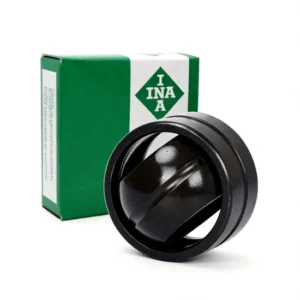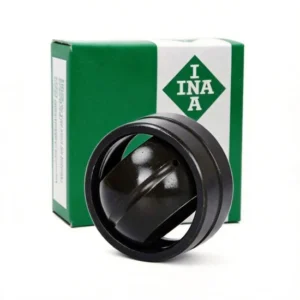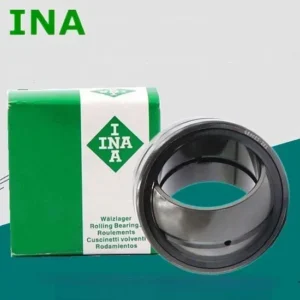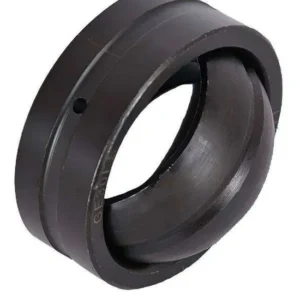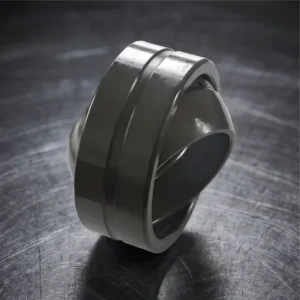
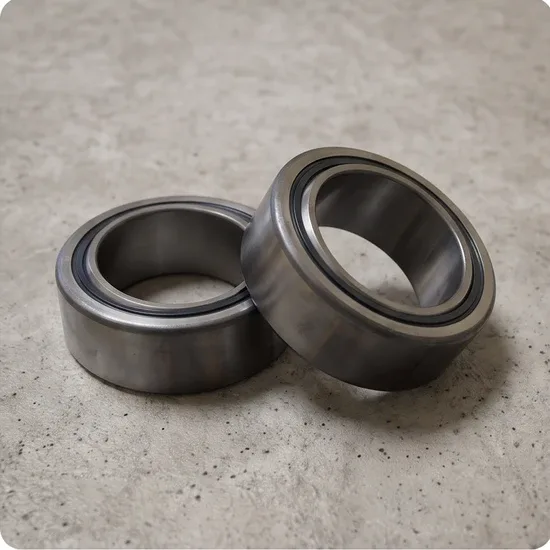
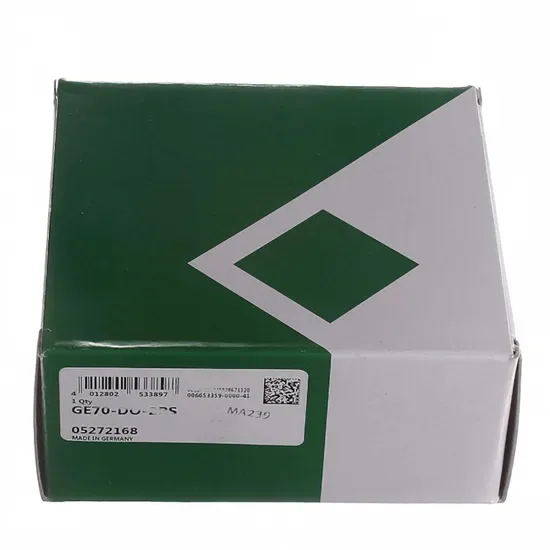
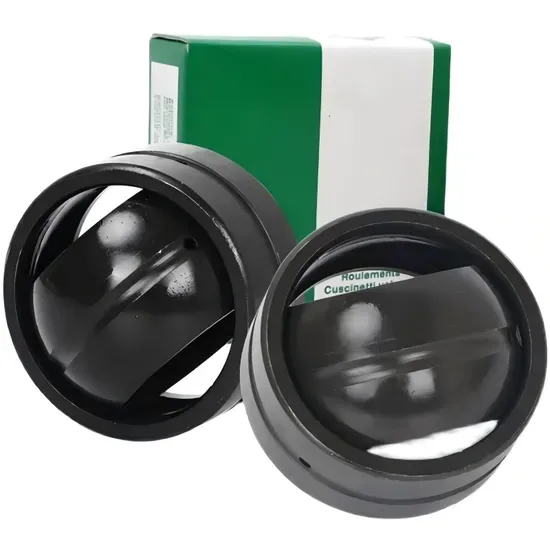
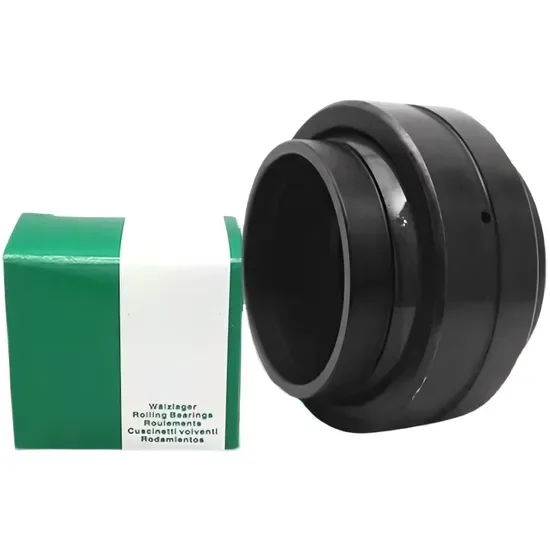
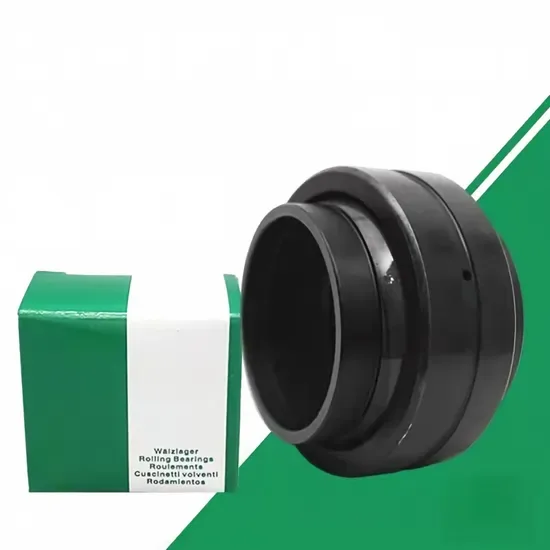

Description
Batch-Traceable Supply — every shipment of INA GE18-PB spherical plain bearings arrives with verifiable Certificate of Conformity and batch lot documentation, so your receiving team can match paperwork to physical stock without customs delays.
Technical Specifications
| Parameter | Value |
|---|---|
| Designation | INA GE18-PB Spherical Plain Bearing |
| Bearing Type | Spherical Plain Bearing, Maintenance-Free (PTFE-Lined) |
| Bore Diameter (d) | 18 mm |
| Outside Diameter (D) | 35 mm |
| Ball Diameter | 31.75 mm |
| Eye Thickness | 23 mm |
| Inner Ring Material | Bearing Steel |
| Outer Ring Material | Bearing Steel |
| Precision Class | P2 |
| Weight | 0.070 kg |
| Origin | China |
Application Suitability
| Industry | Typical Applications |
|---|---|
| Agricultural Machinery | Tractor three-point hitch linkage joints, combine harvester header lift cylinders |
| Construction & Hydraulic Equipment | Excavator bucket pivot pins, loader boom-to-stick connection points |
| Material Handling Systems | Forklift mast roller pivots, conveyor diverter arm bearings |
Why Specifying the Correct Liner Type Matters for Rod End Joints
A steel-on-steel plain bearing installed in a maintenance-free application will fail before the first scheduled service interval.
On a job I worked years back in Shenzhen, a distributor swapped a PTFE-lined joint for a standard GE-series steel/steel unit in a hydraulic cylinder pivot on a crushing plant. The site ran continuous three-shift operation in heavy dust with no greasing protocol. Within weeks the inner ring scored, the outer ring cracked under oscillating load, and the cylinder rod bent from the resulting seizure [NEED_CITE: spherical plain bearing failure modes under misapplication]. The downtime cost eclipsed the unit price many times over. That kind of substitution error happens when procurement matches the bore and OD but ignores what the suffix actually dictates about sliding surface technology. The INA GE18-PB spherical plain bearing uses a PTFE composite liner bonded to the outer ring raceway — a fundamentally different wear mechanism from metal-on-metal contact that relies on periodic grease film replenishment.
How the PTFE Liner Serves Maintenance-Free Pivot Points
The PTFE composite liner on the INA GE18-PB spherical plain bearing transfers load through dry sliding contact, which eliminates relubrication entirely. In hydraulic cylinder eyes and linkage joints exposed to dust, mud, or washdown, removing the grease nipple also removes the primary contamination pathway — dirt ingested through seals during re-greasing accounts for a significant share of plain bearing field failures [NEED_CITE: contamination-induced wear in oscillating bearings]. Our sourcing model means we cross-check liner specifications against OEM maintenance-free design requirements before shipment, not after a field return.
Oscillating Loads, Dust Exposure, and What the Design Must Withstand
Rod end joints in construction and agricultural equipment endure slow oscillation under heavy radial and moment loads, often reversing direction many times per minute. Unlike rotating bearings where lubricant hydrodynamic films build up at speed, oscillating plain bearings operate in boundary lubrication or dry sliding regimes. Temperature swings in outdoor equipment also shift dimensional fits — a tight housing bore can pinch the outer ring and restrict articulation angle. The PTFE liner on this bearing tolerates these conditions because its wear rate is governed by contact pressure and sliding distance rather than lubricant viscosity breakdown [NEED_CITE: PTFE composite liner performance under oscillating loads].
Decoding the Specification Set That Defines Field Life
The -PB suffix confirms PTFE-lined maintenance-free construction, distinguishing it from standard GE-series bearings that require periodic relubrication. Inner and outer rings are manufactured from bearing steel, providing the structural rigidity needed for heavy static and oscillating loads without raceway deformation. The 18 mm bore and 35 mm outside diameter create a compact envelope suited to space-restricted linkage pivots and cylinder eyes. Eye thickness of 23 mm governs the housing width requirement and influences load distribution across the liner contact patch — a wider contact zone lowers contact pressure and extends wear life. P2 precision class indicates tight dimensional tolerances on bore, outside diameter, and ball diameter, which is important where minimal play is needed in steering or control linkage applications.
What a Wrong Liner Selection Actually Costs Downstream
Installing a relubrication-required bearing where maintenance-free was specified does not just shorten bearing life — it voids equipment warranty provisions and shifts liability for consequential damage onto the maintenance team [NEED_CITE: ISO 15243 bearing damage classification]. Cylinder rod bending, housing bore scoring, and pivot pin galling are all documented secondary failures when a plain bearing seizes in service. Counterfeit PTFE-lined bearings with inadequately bonded liners add another failure vector: the liner delaminates under load and metal-to-metal contact initiates without warning.
Sourcing Verification That Goes Beyond the Invoice
Our supply chain delivers the INA GE18-PB spherical plain bearing through authorized distributor channels with batch-traceable documentation. Every shipment is accompanied by the manufacturer’s Certificate of Conformity matched to the specific production lot. We provide cross-brand interchange comparison that aligns bore diameter, outside diameter, eye thickness, and liner type simultaneously — not just base designation matching that misses critical suffix differences. Country-of-origin documentation ships with every order to support customs clearance and import compliance in markets with strict provenance requirements. When your engineering team needs to confirm whether a PTFE-lined or steel/steel bearing suits a specific application, our technical review covers load spectrum, oscillation frequency, and environmental exposure before any quotation is finalized.
Documentation & Authenticity
- Supplier Certificate of Conformity (COC) referencing the specific production batch and lot number for each GE18-PB shipment
- Third-party dimensional inspection report confirming bore diameter, outside diameter, and eye thickness against P2 precision tolerances
- Country-of-origin certificate supporting import documentation and customs clearance in regulated markets
- PTFE liner verification confirming maintenance-free construction per manufacturer datasheet, distinguishing from steel/steel variants
- HS code classification support for spherical plain bearings to accelerate customs processing
Storage, Handling & Mounting
- Retain original sealed packaging until the moment of installation; the PTFE liner on the GE18-PB is vulnerable to surface contamination from workshop dust and moisture that accelerates wear once embedded
- Handle with clean lint-free gloves during mounting; finger oils and abrasive particles transferred to the 18 mm bore or 31.75 mm ball surface compromise the PTFE sliding interface
- Press-fit the outer ring into the housing using controlled axial force on the ring face only; applying force through the inner ring transmits load across the PTFE liner and causes immediate delamination damage
- Verify housing bore tolerance before pressing the 35 mm OD outer ring; an undersized bore creates radial preload that restricts articulation and concentrates contact pressure on the liner
- Store remaining inventory in temperature-stable conditions away from direct sunlight; PTFE composite materials degrade under sustained UV exposure and thermal cycling above ambient ranges
Request a Technical Review Before You Commit to a Batch
Share your application parameters — oscillation angle, cycle frequency, radial load, and environmental exposure — so our engineering team can verify that the PTFE-lined maintenance-free design matches your service conditions. If you are replacing an existing bearing by OEM equipment number, provide the reference so we can run a cross-check on liner type and dimensional envelope. Request the documentation package including COC and origin certification upfront to confirm import compliance before placing bulk orders.
Frequently Asked Questions
Q: What does the -PB suffix indicate on INA spherical plain bearings?
A: The -PB suffix specifies a PTFE composite liner bonded to the outer ring raceway, designating the bearing as maintenance-free with no relubrication requirement. This distinguishes it from standard GE-series bearings with steel-on-steel sliding surfaces that need periodic greasing.
Q: How do I verify whether a plain bearing is genuinely PTFE-lined versus steel/steel?
A: Visual inspection alone is insufficient because some counterfeit products apply surface coatings that mimic PTFE appearance. Verification requires confirming the suffix designation against the manufacturer’s official datasheet and cross-referencing the batch number with production records. We supply this documentation package with every shipment.
Q: Can I substitute a different brand’s spherical plain bearing for the GE18-PB?
A: Cross-brand interchange is possible only when bore diameter, outside diameter, eye thickness, ball diameter, and liner type all match simultaneously. Matching the base number while overlooking liner material leads to the exact kind of maintenance-free application failure described in the pain points above. We provide complete cross-reference comparison covering all six parameters.
Q: What applications require maintenance-free PTFE-lined bearings versus relubrication-required types?
A: Maintenance-free PTFE-lined bearings are specified for applications where relubrication is impractical due to contamination risk, inaccessibility, or food/hygiene requirements. Relubrication-required steel/steel bearings suit applications where regular greasing is part of the maintenance schedule and operating conditions allow grease film replenishment.
Q: How can I identify genuine INA bearings and avoid counterfeit plain bearings?
A: Counterfeit plain bearings often exhibit dimensional deviations on bore and outside diameter, poorly bonded or painted-on liners, and cloned markings with incorrect font weight. Genuine product verification requires batch traceability documentation, dimensional inspection against P2 tolerance limits, and liner material confirmation through manufacturer channels.
Confirm Your GE18-PB Requirements with Our Technical Team
Send us your application parameters or OEM equipment reference, and we will return a cross-reference verification with full documentation package details and batch availability.