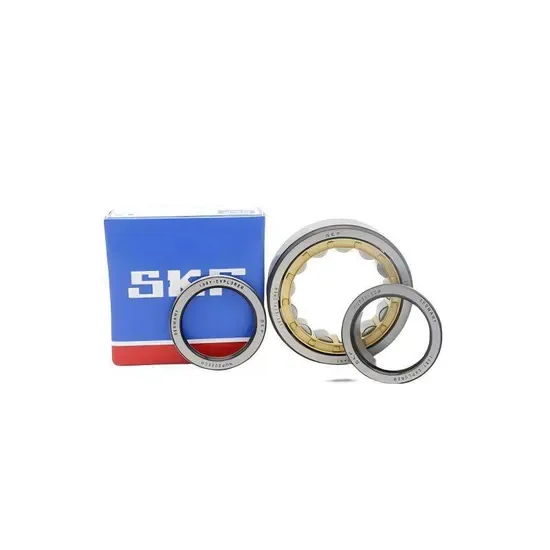
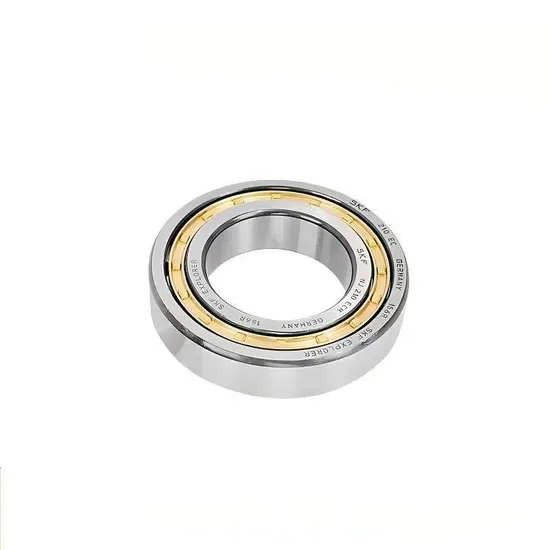
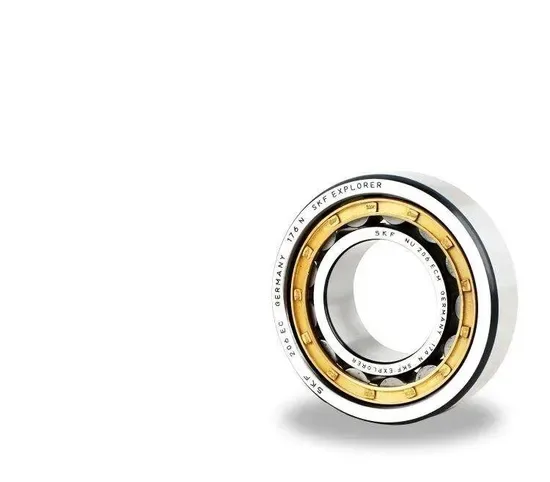
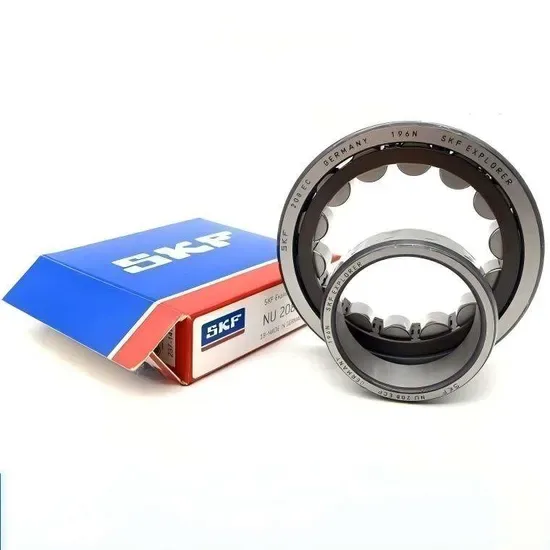
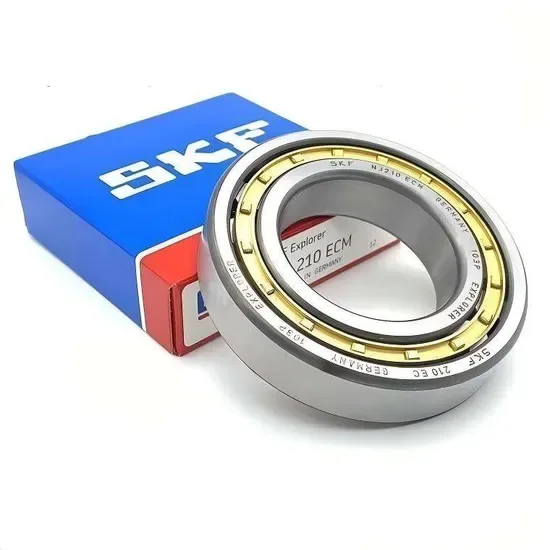
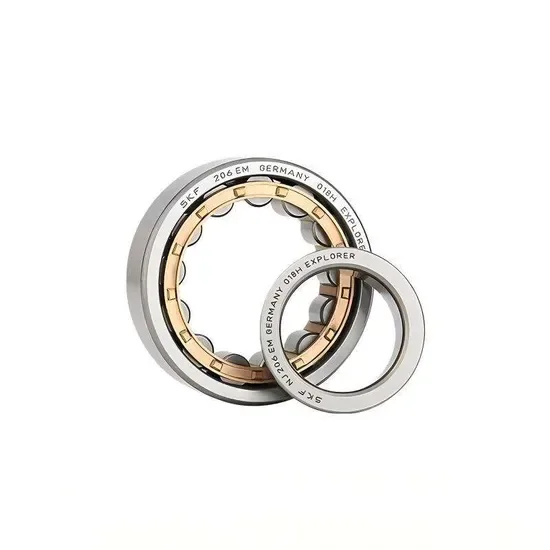
Description
Authorized Sourcing Integrity — SKF NN 3017 TN9/SP shipments include traceable batch documentation from authorized distributor channels with verifiable origin records.
Technical Specifications
| Parameter | Value |
|---|---|
| Designation | SKF NN 3017 TN9/SP |
| Bearing Type | Double Row Cylindrical Roller Bearing |
| Bore Diameter (d) | 85 mm |
| Outside Diameter (D) | 130 mm |
| Width (B) | 34 mm |
| Dynamic Load Rating (C) | 125,000 N |
| Static Load Rating (C₀) | 204,000 N |
| Limiting Speed (Grease) | 6,700 r/min |
| Limiting Speed (Oil-air) | 7,500 r/min |
| Weight | 1.55 kg |
| Cage Material | TN9 — Injection molded glass fiber reinforced polyamide 6,6 |
| Seal or Shield Type | Open |
| Precision Class | SP |
| Number of Rows | Double Row |
| Bore Type | Cylindrical |
| Origin | China |
Note: SP precision suffix requires confirmation against manufacturer catalog for exact dimensional and running accuracy tolerances applicable to this production batch.
Application Suitability
| Industry | Typical Applications |
|---|---|
| Machine Tool Manufacturing | High-speed spindle rear support positions requiring tight radial runout control |
| Precision Equipment | Optical grinding machine wheelhead bearings with minimal thermal drift |
| Heavy-duty Gearboxes | Planetary gear carrier support in wind turbine main drives |
| Rolling Mills | Work roll neck positions demanding sustained radial load capacity under continuous operation |
What Happens When Precision Suffixes Get Ignored on Spindle Bearings
A standard P0 tolerance bearing installed where SP precision was specified will generate measurable thermal growth within hours of spindle startup.
I once worked with a European spindle builder who received a batch of NN 3017 cylindrical rollers graded at standard P0 instead of the required SP class. The spindles passed initial assembly checks but overheated within weeks during commissioning. Vibration readings exceeded ISO limits, and the entire production run required teardown and replacement. That kind of suffix mismatch doesn’t show up on a purchase order discrepancy report — it manifests as warranty claims, field failures, and damaged customer relationships [NEED_CITE: precision bearing thermal stability requirements in machine tool spindles].
How This Bearing Matches High-Speed Spindle Demands
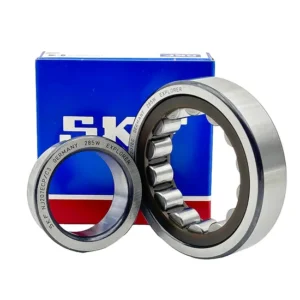
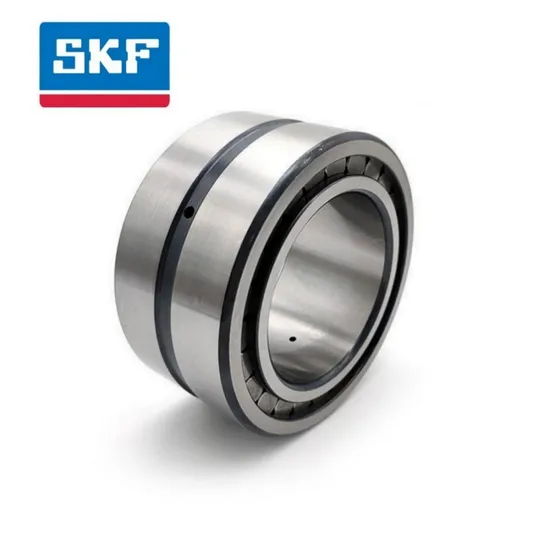
The SKF NN 3017 TN9/SP double row cylindrical roller bearing addresses the specific combination of radial load capacity and speed capability that precision spindle applications demand. The TN9 polyamide cage reduces rotating mass compared to machined brass alternatives, which matters when operating near the upper speed envelope where cage centrifugal forces become a design constraint.
We regularly cross-reference OEM equipment numbers against application parameters to confirm that the specified precision grade actually matches the spindle manufacturer’s original requirement. Too often, maintenance teams source replacement bearings based on the base designation alone, overlooking the suffix that controls running accuracy and dimensional tolerances critical to spindle thermal behavior.
Operating Environment and Performance Demands
Spindle applications subject bearings to sustained radial loads at elevated speeds, creating friction heat that must dissipate through proper lubrication flow. The open design of this bearing allows flexible lubrication strategy selection — oil-air systems for highest speed capability, or grease packing for sealed housing arrangements where contamination risk is controlled externally.
Thermal expansion of the shaft and housing during warmup cycles affects internal clearance, making precision class selection critical. SP grade bearings maintain tighter dimensional control during manufacturing, which reduces the variability in assembled clearance that leads to unpredictable thermal behavior [NEED_CITE: cylindrical roller bearing clearance adjustment under thermal gradients].
Installation in spindle housings typically requires controlled interference fits on both rings, with the separable design allowing inner and outer ring mounting sequences that accommodate assembly logistics without forcing rolling elements through tight fits.
Decoding the TN9 Cage and SP Precision Specification
The TN9 suffix indicates an injection molded glass fiber reinforced polyamide 6,6 cage. This material choice reduces cage weight substantially compared to machined brass, lowering the centrifugal loads on cage pockets at high rotational speeds. Polyamide cages also operate with reduced friction at the rolling element contact points, which matters in applications where every watt of friction heat affects thermal equilibrium.
The cage design suits continuous operating temperatures up to approximately 120°C, which covers most oil-air lubricated spindle applications. For environments where temperatures exceed this threshold or where chemical exposure could attack polyamide, a brass cage alternative would need consideration.
SP precision class indicates dimensional and running accuracy requirements tighter than standard P5 grade, specifically developed for machine tool spindle applications where radial runout and bore-to-OD concentricity affect workpiece surface finish. The specification addresses both inner ring bore tolerances and outer ring OD tolerances, plus the radial runout measured on assembled bearings.
Double row cylindrical construction provides higher radial load capacity than single row variants within the same envelope dimensions, which allows compact spindle designs without sacrificing load margins. The absence of thrust capability means axial positioning must be handled by separate thrust bearings in the spindle arrangement.
The Hidden Costs of Specification Mismatches
Correct specification matching paired with verified genuine product sourcing prevents the cascade of failures that follow a wrong bearing installation. An underspecified precision grade doesn’t fail immediately — it runs hot, accelerates lubricant degradation, and produces vibration that compromises machining accuracy before catastrophic seizure occurs.
Counterfeit bearings with cloned markings and soft inner rings represent a separate failure mode entirely, where material hardness below specification causes premature spalling and potential shaft damage [NEED_CITE: rolling bearing failure mode classification per ISO 15243]. The ISO 281 life calculation framework assumes genuine materials meeting specified hardness and cleanliness standards, which counterfeit products systematically violate.
Warranty voidance follows when OEM equipment manufacturers trace field failures back to unauthorized replacement bearings, regardless of whether the bearing itself caused the problem.
Why Procurement Engineers Validate Through Our Supply Chain
Our sourcing operates through authorized distributor channels rather than claiming direct brand distributorship, which means every shipment carries documentation traceable back to the manufacturer’s production facilities. Batch and lot numbers on certificates of conformity match the physical bearing markings, allowing verification through official brand applications.
We provide cross-reference support that checks clearance class, cage material, and precision grade together — not just matching the base model number. When an OEM drawing specifies a particular suffix combination, our interchange comparison confirms whether alternative brands offer genuine equivalents or whether the application demands the original specification.
Origin documentation accompanies shipments for import clearance requirements, with country-of-origin statements that satisfy customs verification in markets where bearing origin affects duty rates or procurement restrictions. Third-party dimensional inspection reports can be arranged for applications requiring independent verification before installation.
Material certificates confirm steel grade and heat treatment compliance, while batch traceability allows failure investigation to trace back through the supply chain if field problems emerge months after installation.
Documentation & Authenticity
- Certificate of Conformity issued through authorized channel with batch number matching physical bearing laser marking for SKF NN 3017 TN9/SP traceability verification
- QR code verification pathway accessible via official SKF application, confirming genuine product status against manufacturer database records
- Third-party dimensional inspection report available confirming SP precision class running accuracy and bore/OD tolerances before shipment
- Country-of-origin documentation package supporting import clearance procedures and customs verification requirements
- Material test certificate confirming bearing steel grade and heat treatment compliance with manufacturer specifications
Storage, Handling & Mounting
- Maintain original sealed packaging until installation to protect the open bearing design from particulate contamination that would compromise SP precision running accuracy
- Store in temperature-controlled environment avoiding thermal cycling that could cause condensation on precision-ground raceway surfaces
- Handle with clean gloves to prevent fingerprint corrosion on the polyamide cage and ground surfaces before oil-air lubrication provides protection
- Mount inner ring using controlled induction heating to achieve interference fit without forcing rolling elements through the separable outer ring assembly
- Verify residual internal clearance after installation using feeler gauge measurement, as the double row arrangement requires confirmation that shaft and housing fits have not eliminated operating clearance necessary for thermal expansion accommodation
Request Technical Selection Support
Share your spindle application parameters including operating speed, load spectrum, and lubrication method so we can confirm the SKF NN 3017 TN9/SP double row cylindrical roller bearing matches your requirements. Provide OEM equipment model numbers for cross-reference verification against original specifications, including confirmation that SP precision and TN9 cage material align with the manufacturer’s design intent. Request documentation packages in advance if your procurement process requires origin verification or third-party inspection before shipment approval.
Frequently Asked Questions
Q: What does the TN9 cage material mean for my spindle application speed capability?
A: The TN9 polyamide cage reduces rotating mass compared to brass alternatives, which lowers centrifugal loading on cage pockets at high speeds. This allows operation closer to the published limiting speed ratings when lubrication and cooling are properly managed. The material suits continuous temperatures up to approximately 120°C in typical oil-air spindle environments.
Q: How does SP precision differ from standard P5 grade?
A: SP precision specifies tighter dimensional tolerances and running accuracy requirements developed specifically for machine tool spindle applications. The specification controls bore diameter, outside diameter, and radial runout more tightly than standard P5, reducing variability in assembled bearing clearance and thermal behavior during spindle warmup cycles.
Q: Can I substitute a different brand bearing if the model number matches?
A: Base model number matching alone is insufficient — you must verify that clearance class, cage material, and precision grade all align with your application requirements. Cross-reference substitution requires checking whether the alternative brand offers genuine SP precision equivalent and TN9 cage material, not just the same bore and OD dimensions.
Q: What documentation proves the bearing is genuine?
A: Genuine product verification relies on batch traceability documentation from authorized channels, QR code verification through the official SKF application, and physical inspection of laser markings against certificate of conformity records. Counterfeit products often clone markings but fail material hardness testing and dimensional accuracy inspection.
Verify Your SKF NN 3017 TN9/SP Specification Match
Provide application parameters and OEM equipment details to confirm this bearing meets your precision spindle requirements before committing to purchase orders.
Contact our technical selection team through authorized distributor channels for cross-reference verification, documentation package requests, and batch availability confirmation.