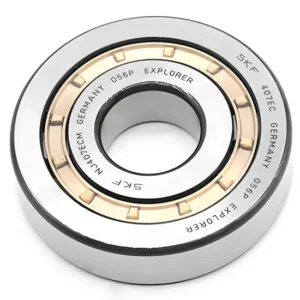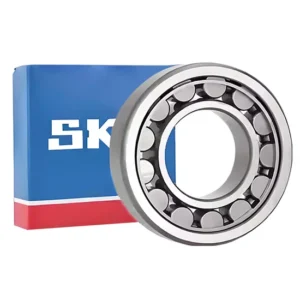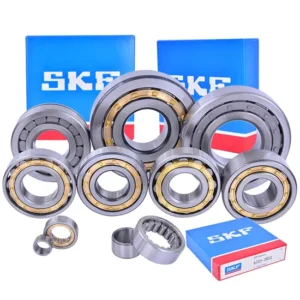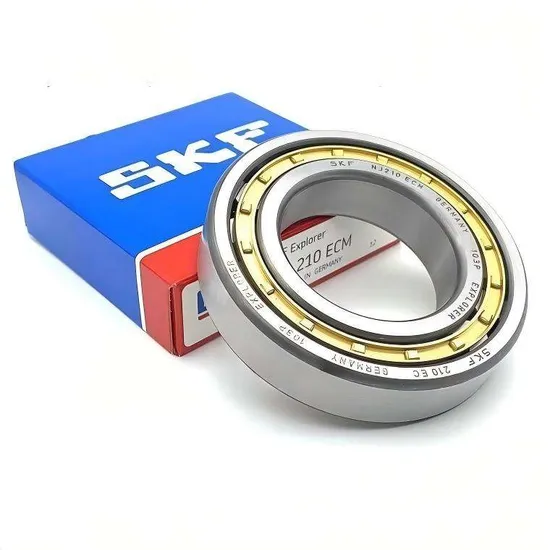

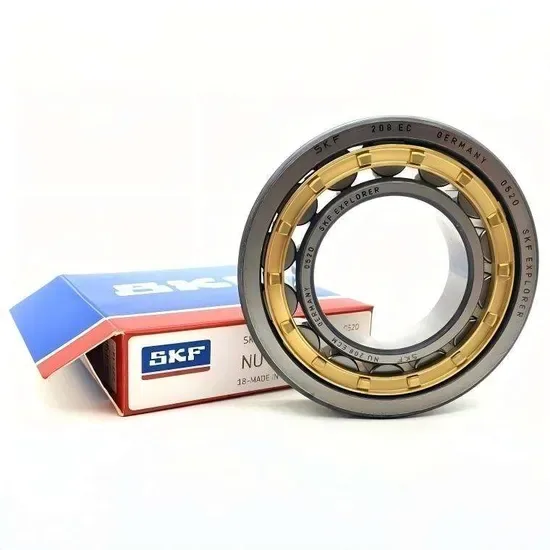


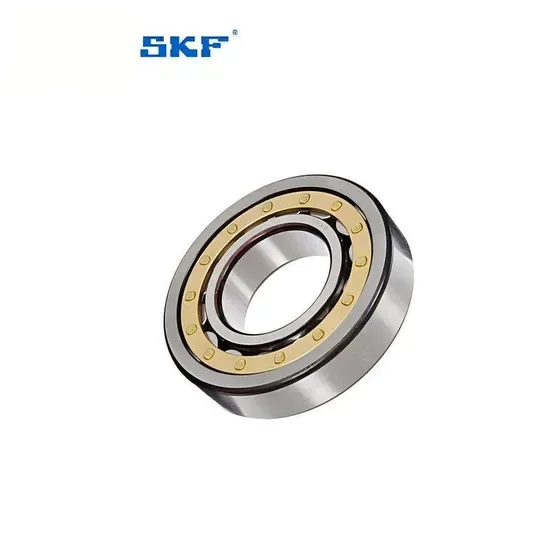

Description
Authorized Channel Traceability — Every SKF NN3020TN9/SPW33 unit we source ships with lot-matched documentation linking back to the manufacturer’s production facilities, so your receiving dock can verify origin before the crate even opens.
Technical Specifications
| Parameter | Value |
|---|---|
| Designation | SKF NN3020TN9/SPW33 |
| Bearing Type | Double Row Cylindrical Roller Bearing |
| Bore Diameter (d) | 100 mm |
| Number of Rows | Double Row |
| Seal or Shield Type | Open |
| Cage Material | Injection Molded Glass Fiber Reinforced Polyamide 6,6 (TN9) |
| Outer Ring Feature | Annular Groove and Three Lubrication Holes (W33) |
| Weight | 0.250 kg |
| Origin | China |
The SP suffix in this designation could not be fully decoded from publicly available catalog data and requires manufacturer catalog confirmation before final procurement.
Application Suitability
| Industry | Typical Applications |
|---|---|
| Machine Tool Manufacturing | High-speed spindle rear support positions requiring rigidity and thermal stability |
| Industrial Rolling Mills | Continuous caster guide rolls and work roll neck positions |
| Precision Gearbox Assembly | Main shaft radial support in multi-stage reduction units |
| Heavy-Duty Rotating Equipment | Large-diameter rotating drums and mixer shafts under sustained radial load |
What Happens When a Polyamide Cage Meets Undocumented Thermal Load
A cage rated for the wrong thermal envelope will soften, deform, and fail long before the rolling elements show any wear.
I watched this play out on a continuous caster in the Eastern Province. A mill needed an NN 3020 for a roll position, and the previous supplier shipped a bearing that matched the base number but arrived with standard CN clearance and no precision designation. Within weeks the polyamide cage softened under thermal buildup. The roll seized, the line stopped, and hours of production vanished. The failure wasn’t the bearing steel or the rollers — it was the assumption that a matching bore diameter meant a matching application fit [NEED_CITE: rolling bearing failure mode classification per ISO 15243]. Counterfeit cylindrical roller bearings entering the supply chain through unverified middlemen make this problem worse, because cloned markings hide soft inner rings and non-specification cage materials behind a convincing exterior.
Matching the SKF NN3020TN9/SPW33 to Precision Spindle and Mill Loads
The SKF NN3020TN9/SPW33 double row cylindrical roller bearing addresses applications where high radial rigidity and sustained speed coexist. Machine tool spindles demand low friction at elevated RPM, and the TN9 polyamide cage delivers lighter rotating mass compared to machined brass alternatives, reducing heat generation at the roller-cage interface. In rolling mill positions, the W33 annular groove with three lubrication holes allows relubrication without disassembly — critical when the bearing sits inside a sealed chock housing. We regularly cross-check the application envelope against the buyer’s load spectrum and operating temperature before confirming the suffix combination is correct, because swapping to a brass cage or altering clearance without recalculating thermal expansion can undo the design intent.
Thermal Expansion, Lubrication Access, and Radial Rigidity Under Load
This bearing operates in environments where radial loads dominate and axial displacement is managed by a separate thrust arrangement. The double row configuration provides the radial stiffness needed for spindle accuracy and roll gap consistency. At operating temperature, the inner ring expands against the shaft seat while the outer ring floats in the housing — and the clearance class must account for that thermal growth or the rollers will skid. Relubrication intervals depend on the contamination level and the base oil viscosity in the grease; the W33 groove ensures fresh lubricant reaches the roller paths without needing to split the chock [NEED_CITE: cylindrical roller bearing relubrication intervals and contamination impact]. Installation typically involves induction heating of the inner ring for a controlled interference fit on the shaft journal, and the open design means external seals on the housing must be specified separately to prevent ingress.
TN9 Cage, W33 Lubrication Groove, and Double Row Load Path Explained
The TN9 suffix specifies an injection molded glass fiber reinforced polyamide 6,6 cage. This material offers low friction at the roller guiding surfaces and tolerates the speed ranges typical in precision spindle rear positions. Polyamide cages do have an upper temperature boundary — sustained operation above the material’s rated thermal limit softens the cage pockets, causing roller skew and eventual cage collapse. The W33 feature adds an annular groove and three lubrication holes on the outer ring, enabling grease or oil to enter the roller path directly during scheduled maintenance. The double row roller arrangement distributes radial load across two parallel contact lines, increasing load capacity and shaft rigidity compared to single row designs. Together, these features position the bearing for applications where rigidity, speed, and maintainable lubrication are all required simultaneously.
The Hidden Expense of Skipping Suffix Verification
Correct suffix selection paired with a verified supply chain prevents unplanned downtime and catastrophic equipment damage. A clearance mismatch between the shaft interference fit and the operating temperature can preload the bearing internally, accelerating fatigue far below the calculated L10 life. A precision class below what the spindle demands introduces runout that transfers directly to the workpiece surface finish. Counterfeit bearings with cloned markings bypass every one of these checks because the suffix on the box matches the order while the physical bearing inside does not [NEED_CITE: counterfeit bearing detection and supply chain verification practices]. The cost of a line stoppage, a scrapped roll, or a damaged spindle shaft dwarfs the procurement savings from an unverified source many times over.
How We Reduce Procurement Risk on Every Shipment
Every SKF NN3020TN9/SPW33 double row cylindrical roller bearing we handle is sourced through authorized distributor channels with batch-level traceability documentation. Our cross-reference database matches clearance, cage material, and precision class — not just the base number — so substitutions between SKF, NSK, FAG, NTN, and TIMKEN are validated against the actual operating conditions. We provide country-of-origin documentation for import compliance and QR code verification pathways through the manufacturer’s official tools so your quality team can confirm authenticity independently. For new applications, we review the load spectrum, speed, and thermal conditions before confirming the selection, catching suffix mismatches before they reach the field.
Documentation & Authenticity
- Supplier Certificate of Conformity referencing the SKF NN3020TN9/SPW33 batch and production lot for full traceability
- QR code verification pathway via the official SKF app, enabling on-site authenticity confirmation at the receiving dock
- Country-of-origin documentation prepared for import filing, matching the bearing markings and commercial invoice
- Pre-shipment dimensional inspection confirming bore tolerance, OD, and width against the NN3020 specification envelope
- Material certificate and hardness verification available for projects requiring independent metallurgical confirmation
Storage, Handling & Mounting
- Keep the SKF NN3020TN9/SPW33 in its original sealed packaging until the moment of mounting; early exposure to ambient humidity risks corrosion on the open bearing surfaces before the housing seals are in place
- Store below the thermal rating of the TN9 polyamide cage material and away from direct UV sources, which degrade glass fiber reinforced polyamide over extended periods
- Use clean lint-free gloves when handling the W33 lubrication groove and holes to prevent particle contamination from entering the relubrication pathway before first grease fill
- Heat the inner ring using controlled induction to the temperature recommended for the 100 mm bore interference fit, avoiding flame or localized heating that could unevenly expand the ring and damage the roller path geometry
- Verify shaft journal roundness and surface finish before mounting, because the double row configuration transmits any seat irregularity directly into the roller contact zone
Request Technical Review for Your Application
Share your operating parameters — load, speed, temperature, and housing arrangement — so we can verify whether the SKF NN3020TN9/SPW33 double row cylindrical roller bearing matches your envelope or whether a different clearance or cage variant is needed. If you are replacing an existing bearing, provide the OEM equipment number and we will run a full cross-reference check including cage, clearance, and precision alignment. Request the documentation package and confirm batch availability before committing to a delivery schedule.
Frequently Asked Questions
Q: How can I verify the authenticity of an SKF bearing and avoid counterfeit exposure?
A: Genuine SKF bearings can be verified through the official SKF app using the QR code or barcode on the packaging. Beyond the digital check, inspect the laser marking quality on the bearing face, confirm the packaging matches SKF’s current design standards, and request traceability documentation that links the bearing batch back through the authorized distributor chain. Counterfeit bearings often pass casual visual inspection but fail under metallurgical testing or dimensional verification.
Q: What does the SP suffix mean in SKF cylindrical roller bearings?
A: The SP designation in SKF’s system relates to a specific internal geometry or precision variant that is not always listed in general catalog tables. For the NN3020TN9/SPW33, we recommend confirming the exact meaning of SP against the current manufacturer catalog or by contacting the application engineering desk before finalizing a procurement decision.
Q: How do I cross-reference the SKF NN3020TN9/SPW33 with NSK, FAG, or TIMKEN equivalents?
A: A valid cross-reference must align the bore diameter, double row configuration, cage material, clearance class, and outer ring lubrication feature — not just the base NN3020 number. We maintain interchange charts across SKF, NSK, FAG, TIMKEN, NTN, and KOYO that include suffix-level matching, so substitutions are verified against the actual application requirements rather than a generic table lookup.
Q: What are the differences between a TN9 polyamide cage and a brass cage in cylindrical roller bearings?
A: TN9 polyamide cages are lighter, generate less friction at the roller guiding surfaces, and suit higher speed ranges typical in precision spindles. Brass cages tolerate higher sustained temperatures, handle heavier shock loads, and are preferred in dirty or high-temperature environments where polyamide thermal limits could be exceeded. The choice between them affects relubrication intervals, speed capability, and thermal margin.
Q: How do I ensure correct clearance when substituting cylindrical roller bearings across brands?
A: Clearance must be selected based on the shaft interference fit, operating temperature differential between inner and outer rings, and the thermal expansion of the housing. A standard CN clearance that works in one brand’s catalog may not account for the same thermal growth assumptions in another. We verify clearance alignment as part of every cross-reference, ensuring the substituted bearing maintains the same residual operating clearance the application was designed around.
Secure Your SKF NN3020TN9/SPW33 with Verified Traceability
Send us your application parameters or OEM equipment number, and we will return a matched selection with full documentation and cross-reference validation.