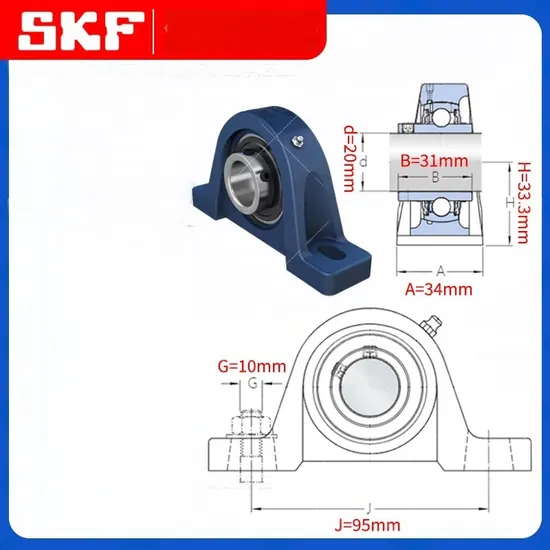

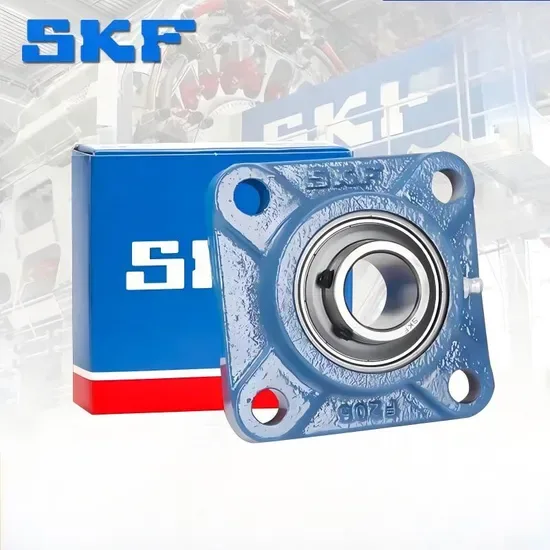


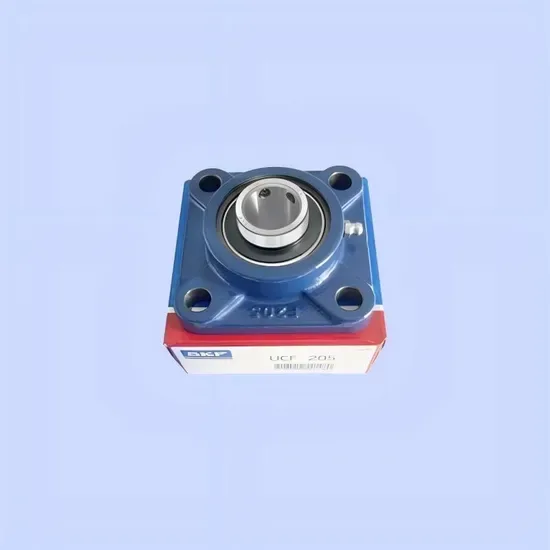

Description
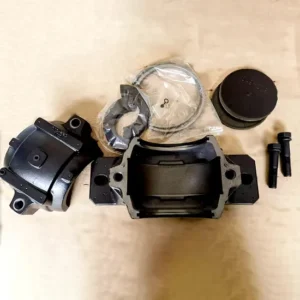
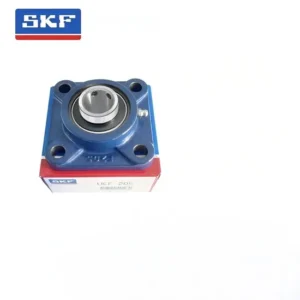
Genuine Traceable Sourcing — UCF206 pillow block bearing with housing units are procured through verified distributor networks with full batch and lot documentation, ensuring the cast iron housing bore and insert fit meet OEM tolerance requirements.
Technical Specifications
| Parameter | Value |
|---|---|
| Designation | UCF206 Pillow Block Unit (Generic) |
| Bearing Type | Pillow Block Unit with Square Flange |
| Bearing Block Model | F (Square Flange, 4-bolt) |
| Bore Diameter (d) | 30 mm |
| Aligning | Aligning Bearing (Self-Aligning Spherical Raceway) |
| Separated | Separated (Insert and Housing) |
| Number of Rows | Single Row |
| Raceway | Spherical Raceway |
| Features | Corrosion Resistant, High Temperature, High Speed |
| Mounting | 4-Bolt Square Flange |
| Origin | Sourced via Authorized Distributor Channels |
Note: Specific internal clearance and seal types (e.g., C3, 2RS) are subject to batch availability and must be confirmed prior to dispatch to match the application envelope.
Application Suitability
| Industry | Typical Applications |
|---|---|
| Material Handling | Conveyor drive and return rollers, belt tracker pivot points. |
| Agricultural Machinery | Grain auger drive shafts, harvester elevator sprockets, irrigation pump drives. |
| General Industrial | HVAC blower shafts, light-duty mixer agitators, packaging line idlers. |
Why Suffix Accuracy and Bore Fit Matter for the UCF206 Pillow Block Bearing with Housing
A loose fit between the insert outer ring and the housing bore leads to "creep," which rapidly destroys the housing and shaft.
In the field, I have found that a significant share of premature failures in UCF206 pillow block bearing with housing units is not due to the bearing itself, but to the machining tolerance of the generic housing. If the housing bore is even slightly oversized, the insert outer ring spins under load. This creates intense friction heat and gouges the shaft, often requiring complete replacement of the driven component. [NEED_CITE: bearing housing bore tolerance and outer ring creep failure modes per ISO 15243]. When sourcing replacements, verifying the dimensional inspection report of the housing is just as critical as the material certificate of the insert.
Matching the Insert to the Conveyor Load Spectrum
The UCF206 pillow block bearing with housing is designed to handle radial loads typical in conveyor and material handling systems. The spherical raceway insert accommodates static misalignment during installation, which is common in long conveyor frames where perfect shaft alignment is difficult to achieve. However, the square flange housing must be bolted to a rigid, flat surface to prevent housing distortion. For applications involving frequent start-stop cycles, we cross-reference the internal clearance and the locking mechanism (set screw vs. eccentric collar) to ensure the insert stays secure on the shaft without inducing excessive localized stress.
Operating Challenges in Agricultural and Dusty Environments
Agricultural equipment exposes these units to a combination of abrasive dust, moisture, and irregular shock loads from uneven terrain. The "Corrosion Resistant" feature noted in the product specs often refers to zinc plating or specific surface treatments on the housing and insert outer surfaces. In grain mill environments, fine particulate matter can bypass standard seals if the contact lip wears down. For these conditions, we recommend confirming the seal type (typically triple-lip or rubber flinger seals) and establishing a re-lubrication schedule based on the operating temperature and contamination level. [NEED_CITE: agricultural bearing seal performance in high-dust environments].
Decoding the Spherical Raceway and Separable Design
The core engineering of this unit lies in the "Spherical Raceway" of the insert. This allows the inner ring and ball assembly to pivot slightly within the outer ring, compensating for mounting errors or shaft deflection. The "Separated" nature of the unit means the insert (UC206) can be replaced independently of the cast iron housing (F206), provided the housing bore has not been damaged by creep or corrosion. The square flange design offers higher stability than circular flanges in applications where the load direction is constant or where the unit is mounted vertically.
The Hidden Cost of Soft Housings and Counterfeit Inserts
A generic housing cast from low-grade iron may crack under shock loads, while a counterfeit insert with a "soft" inner ring (below 58 HRC) will deform under the set screws, leading to shaft slippage. These failures result in unplanned downtime that far exceeds the initial savings from buying a cheaper unit. We follow ISO 281 life calculation frameworks, which assume correct material hardness and geometry; when these are compromised, the calculated L10 life is meaningless. [NEED_CITE: impact of material hardness on bearing fatigue life ISO 281].
Why Maintenance Engineers Source Through Us
Our sourcing model focuses on the integrity of the supply chain. We do not simply match the UCF206 designation; we verify the manufacturer’s production facilities and ensure the batch traceability matches the Certificate of Conformity. We provide cross-reference comparisons that account for the housing bore tolerance and the insert’s internal geometry, ensuring that a substitute from a different brand (e.g., SKF, FAG, or NTN equivalents) will fit and perform correctly. We also supply country-of-origin documentation to support import compliance in regions with strict trade regulations.
Documentation & Authenticity
- Supplier Certificate of Conformity (COC): Linking the specific batch number to the foundry and assembly origin.
- Material Certification: Verifying the bearing steel (typically GCr15 / 100Cr6) and the cast iron grade of the square flange housing.
- Dimensional Inspection Report: Confirming the 30 mm bore of the insert and the H7 tolerance of the housing bore to prevent outer ring creep.
- Country-of-Origin Documentation: Essential for customs clearance and tariff verification in international shipments.
Storage, Handling & Mounting
- Keep the UCF206 unit in original packaging until installation to protect the zinc-plated surfaces and rubber seals from oxidation and UV degradation.
- Check the housing bore for any signs of corrosion or damage before installing a new insert; a compromised bore will ruin the replacement unit.
- Use a torque wrench for the four flange bolts to ensure even clamping force and prevent housing distortion that could bind the self-aligning feature.
- Lubricate through the grease nipple on the housing before first use, ensuring the grease fills the cavity to expel any moisture introduced during shipping.
Requesting a Quotation and Technical Review
To ensure the UCF206 pillow block bearing with housing meets your specific site conditions, please share the shaft speed, load estimates, and environmental factors (dust/water). If you are replacing an existing unit, provide the OEM equipment number or photos of the nameplate so we can verify the cross-reference, including any specific suffix requirements for clearance or sealing. We will respond with a technical proposal, lead time, and the documentation package available for your batch.
Frequently Asked Questions
Q: How can I verify the authenticity of the UCF206 unit and its material quality?
A: We provide a Certificate of Conformity (COC) with batch traceability. For the insert, you can request material certifications verifying the steel grade (GCr15/100Cr6). We also guide you on using brand-specific apps to scan QR codes if you are sourcing a specific premium brand equivalent through our network.
Q: What is the difference between the UC206 insert and the F206 housing?
A: The UC206 is the bearing insert with the spherical outer diameter and 30mm bore. The F206 refers to the square flange housing that holds this insert. Together they form the UCF206 pillow block bearing with housing unit. It is crucial that the housing bore matches the insert’s outer diameter tolerance to prevent "creep."
Q: Can I use a UCF206 from a different brand if the original is out of stock?
A: Yes, but the cross-reference must go beyond the base number. We compare the internal clearance, the seal type (contact vs. non-contact), and the locking mechanism (set screw vs. eccentric collar) to ensure the substitute performs reliably in your specific application.
Q: How do I know if the housing bore is worn out?
A: If the old insert spun in the housing, you will see polished or gouged marks inside the bore. A worn housing bore will not provide the necessary interference fit for the new insert, leading to rapid failure of the replacement unit. In such cases, the entire UCF206 unit must be replaced.
Genuine UCF206 Sourcing Starts Here
Share your application parameters or OEM part number to receive a cross-reference comparison and a verified quotation.
Contact: Sourcing Team via official inquiry channels listed on our corporate portal.