Description
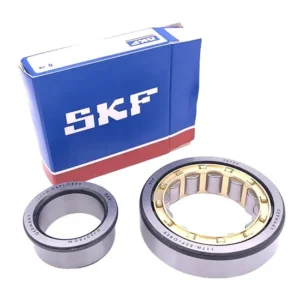
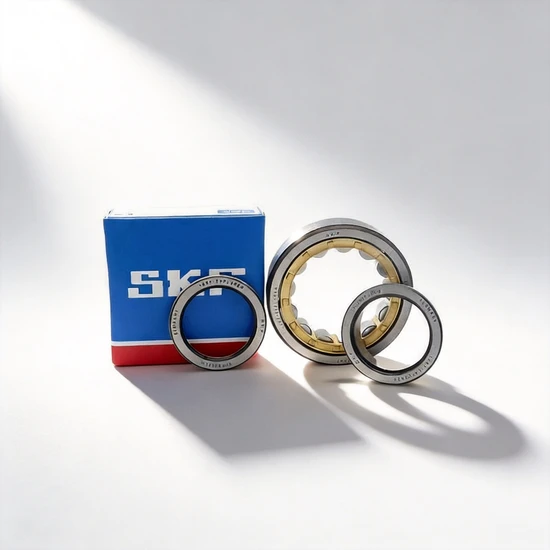
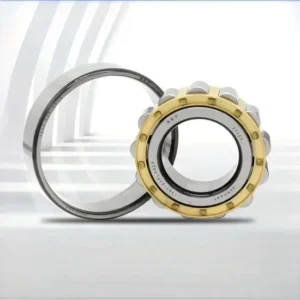
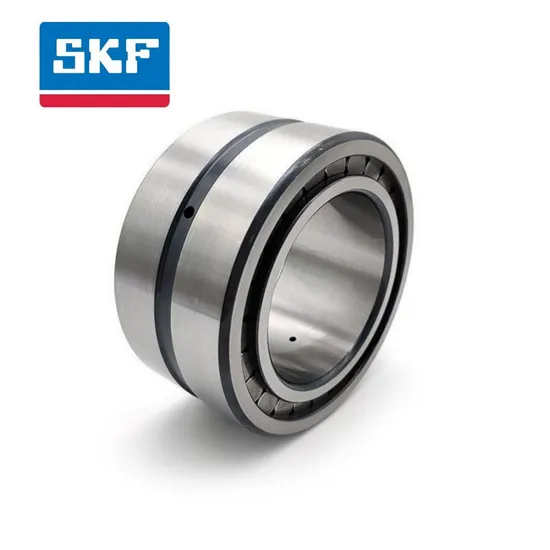
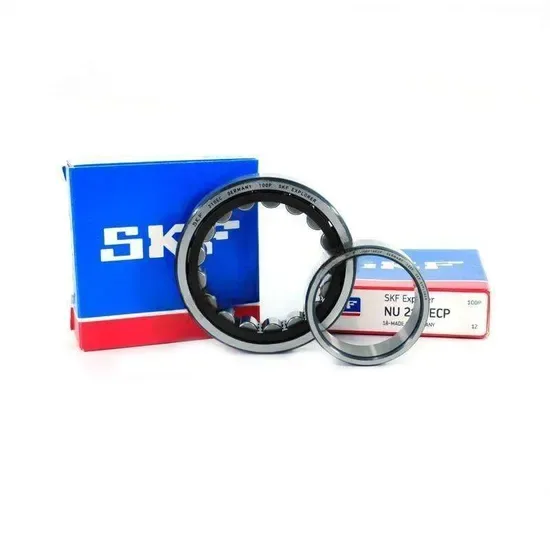
Authorized Channel Traceability — Every SKF NN 3016KTN/HC5SPW33 cylindrical roller bearing we ship carries a verifiable batch record traceable through the original authorized distributor network, not a repackaged import.
Technical Specifications
| Parameter | Value |
|---|---|
| Designation | SKF NN 3016KTN/HC5SPW33 |
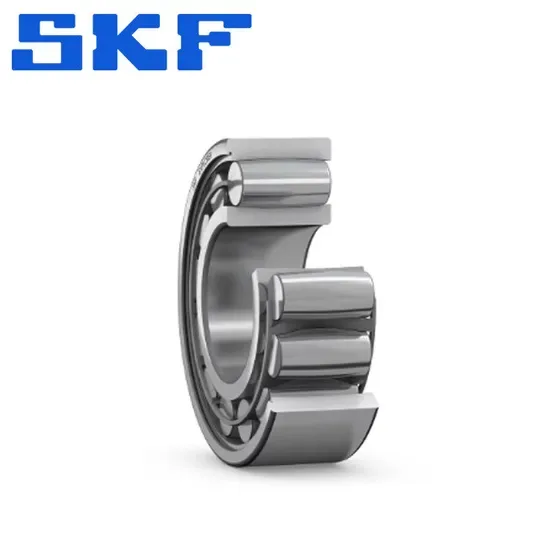
| Bearing Type | Double Row Cylindrical Roller Bearing |
| Bore Diameter (d) | 80 mm |
| Outside Diameter (D) | 125 mm |
| Width (B) | 34 mm |
| Bore Type | Tapered bore, taper 1:12 (K) |
| Number of Rows | Double Row |
| Cage Material | Injection molded glass fiber reinforced polyamide 6,6 (TN9) |
| Seal or Shield Type | Open |
| Precision Class | P6 (SP suffix range, source value — verify with manufacturer catalog for exact class) |
| Origin | China |
| Arrangement | NN design — inner ring with two flanges, outer ring without flanges |
Note: The /HC5SPW33 compound suffix contains elements that require confirmation against the official SKF super-precision bearing catalog for hybrid ceramic rolling element designation and exact precision class split.
Application Suitability
| Industry | Typical Applications |
|---|---|
| Machine tool manufacturing | High-speed spindle rear support positions requiring thermal stability |
| Industrial gearboxes | Precision planetary gear shafts with tight radial runout requirements |
| Steel and metallurgy | Rolling mill guide roller journals operating under continuous radial load |
| General industrial machinery | Equipment where P6 dimensional accuracy prevents vibration transfer to adjacent components |
Why the Wrong Suffix on an NN 3016 Costs More Than the Bearing Itself
A single overlooked suffix letter can turn a precision spindle bearing into a thermal time bomb.
I once watched a textile mill in Campinas replace their NN3016 spindle bearings with what the purchasing sheet called a "same number" substitute. Nobody on the receiving dock checked the HC5SP suffix cluster. Standard P0 clearance, steel cage, no ceramic rolling elements went into a spindle designed for hybrid construction and super-precision tolerances. Three weeks later the spindle seized at 12,000 RPM and took the drawbar with it. The downtime, tooling damage, and scrap material ran into figures the maintenance manager still brings up years later. That is the quiet cost of treating suffix strings as optional decoration rather than engineering specification. [NEED_CITE: bearing failure mode classification per ISO 15243]
Matching This Bearing to High-Speed Spindle Environments
The SKF NN 3016KTN/HC5SPW33 cylindrical roller bearing earns its place in machine tool spindles because the NN design — two flanges on the inner ring, none on the outer — allows the outer ring to float axially, accommodating thermal shaft growth without inducing preload spikes. When a spindle ramps from idle to 10,000+ RPM, the shaft elongates. A bearing that fights that expansion transfers axial force directly into the rolling elements. Our sourcing practice always pairs this designation with the full OEM equipment drawing so the cross-reference matches not just the base number but the cage material and precision suffix stack that the original equipment engineer specified.
Operating Conditions That Define the Specification Boundary
These spindles see predominantly radial loads with minimal axial component, which suits the cylindrical roller geometry well. Speed is the governing constraint — at elevated RPM, friction heat at the roller-raceway contact demands a cage that stays dimensionally stable without adding rotational mass. Temperature gradients across the housing also mean the mounted clearance must account for differential expansion between shaft and bore seat. The tapered bore adds another layer: during mounting, the axial drive-up distance on the tapered seat directly controls residual internal clearance, and getting that wrong by even a fraction of a turn converts a precision fit into a preloaded disaster. Proper induction heating of the inner ring, controlled drive-up measurement, and verification of residual clearance with a feeler gauge or dial indicator are non-negotiable steps. [NEED_CITE: tapered bore bearing mounting procedures and residual clearance verification]
Decoding the Suffix Stack That Makes This Bearing Work
The K tapered bore with its 1:12 taper ratio means this inner ring mounts directly onto a tapered shaft journal or an adapter sleeve, and the interference fit is achieved by driving the ring axially up the taper. The further it travels, the tighter the grip — and the smaller the residual internal clearance. The TN9 polyamide 6,6 cage reinforced with glass fiber is chosen deliberately for high-speed cylindrical roller applications: it is lighter than machined brass, reduces centrifugal loading on the rollers, and runs cooler under oil-air or oil-mist lubrication typical of spindle environments. The W33 annular groove with three lubrication holes in the outer ring allows relubrication without dismounting — oil or grease injected through the housing port reaches the roller paths directly, flushing contaminants and replenishing the film. The precision designation places this bearing in the SP (super-precision) tolerance band, meaning bore and outside diameter tolerances, as well as running accuracy, are held tighter than standard production — essential for preventing vibration signature issues in finished surface quality on machined parts.
The Hidden Ledger of Selection Errors
When a purchasing decision is driven by base-number matching alone, the failures rarely announce themselves immediately. A standard-clearance substitute in a spindle designed for reduced clearance will run loose, allowing roller skew and cage instability at speed. A steel cage where TN9 was specified adds rotational inertia and changes the thermal equilibrium. Counterfeit bearings with soft inner rings — rings that never received proper through-hardening — may pass a superficial hardness check but collapse under sustained radial load within weeks. These failure modes map cleanly onto ISO 15243 categories: subsurface fatigue from material defects, surface-initiated fatigue from contamination, and thermal fracture from lubrication breakdown. None of them show up on a packing slip. [NEED_CITE: rolling bearing failure modes and ISO 15243 classification framework]
What Changes When You Source Through Verified Channels
We built our business around the gap between a part number and a verified part. Every SKF NN 3016KTN/HC5SPW33 cylindrical roller bearing we quote goes through a suffix-by-suffix verification before the proforma invoice is issued, because we have seen what happens when that step is skipped. Our authorized distributor channel sourcing means the batch you receive carries the same lot traceability the manufacturer’s production facilities assigned at final inspection. For buyers managing cross-brand interchange, we match clearance class, cage material, and precision designation simultaneously — not just the base designation — so a substitution from NSK or FAG into the same envelope carries identical performance boundaries. Country-of-origin documentation travels with every shipment because we know that customs officers at destination ports do not accept vague answers.
Documentation & Authenticity
- Supplier Certificate of Conformity referencing the exact batch and lot number assigned at the authorized distributor point of origin
- QR code verification pathway using SKF official mobile applications to confirm authenticity of the physical marking against the manufacturer database
- Material certificate documenting the bearing steel grade and heat treatment record for the specific production lot
- Third-party dimensional and runout inspection report confirming P6 running accuracy prior to dispatch, available on request
- Country-of-origin certificate and HS code classification supporting smooth customs clearance at the destination port
Storage, Handling & Mounting
- Retain the original sealed packaging until the moment of mounting; early exposure to humid workshop air compromises the factory-applied corrosion inhibitor on the open bearing surfaces
- The tapered bore requires controlled axial drive-up on the 1:12 seat — always measure the drive distance or residual clearance rather than relying on torque feel alone
- Polyamide TN9 cages have a maximum continuous operating temperature limit; confirm that the spindle oil-air or oil-mist system will not exceed this threshold under sustained load
- W33 lubrication holes must align with the housing lubrication port during outer ring installation; mark the alignment before final seating to avoid blocking the relubrication path
- Store horizontally in a vibration-free area; stacked or vertical storage on the outer ring can create brinelling marks on the raceway under the weight of the inner ring and roller assembly
Request a Specification Match
Share your spindle speed, radial load, and housing bore tolerance so we can verify whether this exact suffix configuration fits your application or whether an alternate clearance class is warranted. If you are replacing an existing bearing, send us the OEM equipment number and the marking string from the removed unit — we will cross-reference the full suffix stack and flag any mismatch before quotation.
Frequently Asked Questions
Q: How do I verify the authenticity of a received SKF NN 3016KTN/HC5SPW33?
A: Scan the QR code on the bearing packaging or product label using the official SKF mobile verification application. The app cross-references the code against the manufacturer’s production database and returns the original batch and lot record. We also supply a Certificate of Conformity with every shipment that ties the physical bearing to its authorized distributor chain.
Q: What does the TN9 cage designation mean and why does it matter for this application?
A: TN9 identifies an injection-molded polyamide 6,6 cage reinforced with glass fiber. In high-speed cylindrical roller spindle applications, this cage material reduces weight and centrifugal load compared to machined brass, runs cooler, and is compatible with oil-air and oil-mist lubrication systems common in machine tool environments.
Q: How do I cross-reference this bearing to NSK or FAG equivalents?
A: Cross-referencing requires matching more than the base NN 3016 number. You must confirm that the substitute carries equivalent tapered bore geometry, the same cage material class, matching precision tolerance band, and identical lubrication features. We provide a full cross-brand comparison covering these parameters before confirming interchangeability.
Q: What is the correct mounting procedure for the tapered bore on this bearing?
A: The inner ring is driven axially up the 1:12 tapered shaft seat or adapter sleeve until the specified interference fit and residual internal clearance are achieved. Drive distance must be measured, and residual clearance verified with a feeler gauge or dial indicator. Induction heating of the inner ring to the recommended temperature range facilitates installation without mechanical damage to the cage or rollers.
Q: What documentation accompanies the shipment for import purposes?
A: Each order ships with a Certificate of Conformity, batch and lot traceability record, material certificate, country-of-origin documentation, and HS code classification. Third-party inspection reports are available upon request to support dimensional verification at the destination.
Get a Verified Quote for Your Spindle Application
Send us your application parameters or OEM equipment number and we will confirm suffix compatibility, availability, and lead time within one business cycle. Reach our technical sales team through your existing inquiry channel or request a callback from our sourcing desk.