

Description
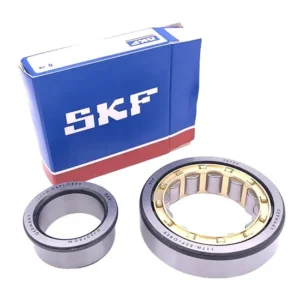
Traceable Sourcing — SKF NN3022 TN9/SPW33 shipments ship with batch-linked Certificate of Conformity and QR verification through SKF’s official app, confirming origin and super-precision conformance before dispatch.
Technical Specifications
| Parameter | Value |
|---|---|
| Designation | SKF NN3022 TN9/SPW33 |
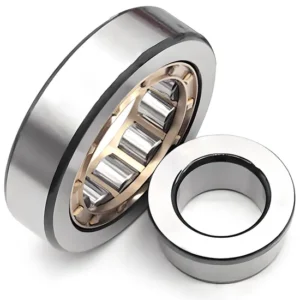
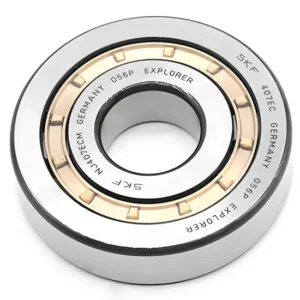
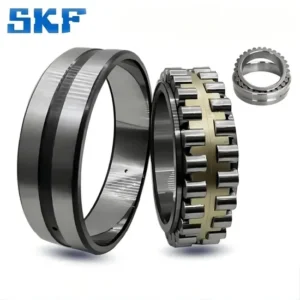
| Bearing Type | Double Row Cylindrical Roller Bearing |
| Bore Diameter (d) | 110 mm |
| Outside Diameter (D) | 170 mm |
| Weight | 2.95 kg |
| Cage Material | Injection molded glass fiber reinforced polyamide 6,6 (TN9) |
| Lubrication Feature | Annular groove and three lubrication holes in outer ring (W33) |
| Precision Class | SP (Super Precision) |
| Number of Rows | Double Row |
| Origin | China |
Application Suitability
| Industry | Typical Applications |
|---|---|
| Machine Tool Manufacturing | High-speed spindle main shaft / precision boring bar quill |
| Industrial Gearbox | Precision planetary gearbox sun gear support / high-speed pinion shaft |
| Printing Machinery | Impression cylinder bearing / plate cylinder journal |
| General Industrial Equipment | High-frequency motor shaft / precision pump rotor support |
When Super-Precision Spindle Bearings Fail Before the First Shift
A soft inner ring on a counterfeit SP-class bearing can cause thermal seizure within the first 24 hours of spindle operation.
Sourcing replacement spindle bearings often involves navigating an opaque secondary market where cloned packaging and duplicated QR codes pass casual visual inspection. The core issue is not just visual deception but metallurgical compromise: induction-hardened raceways that do not reach the required depth, or rings machined from stock that lacks proper degassing, leading to subsurface inclusions. For a machine tool shop running three shifts, a spindle teardown caused by premature cage failure or thermal binding translates into scrapped workpieces, missed delivery windows, and a complete loss of confidence in the supply chain [NEED_CITE: rolling bearing failure mode classification per ISO 15243]. A genuine SKF NN3022 TN9/SPW33 double row cylindrical roller bearing, sourced through documented channels, mitigates this risk at the component level.
Matching the NN3022 to High-Speed Spindle Loads
This designation handles the heavy radial loads characteristic of belt-driven or direct-drive spindles while maintaining the rotational accuracy required for finishing cuts. The double row roller configuration distributes radial forces across a wide contact envelope, which stabilizes the shaft under the interrupted cutting forces common in milling operations. We typically cross-verify the application parameters against the OEM spindle drawing to ensure the envelope dimensions and shaft tolerances align with this specific 110 mm bore, 170 mm OD configuration.
Speed, Heat, and the Spindle Lubrication Balance
Spindle environments demand a compromise between speed capability and contamination exclusion. The TN9 polyamide cage reduces sliding friction against the roller guidance flanges compared to a machined brass alternative, which is essential when rotational speeds push toward the bearing’s thermal limit. Temperature rise at the inner ring affects the effective radial internal clearance; if the shaft expands more than the housing, the clearance closes, potentially leading to preload and thermal runaway. The W33 annular groove with three lubrication holes allows for oil-air or oil-jet lubrication directly through the outer ring, ensuring lubricant reaches the roller-cage interface without requiring complex internal channeling in the spindle housing [NEED_CITE: spindle bearing lubrication methods for machine tools].
Decoding the TN9, SP, and W33 Designations
The SP precision class establishes strict tolerances on radial runout and bore/housing seat diameter variation, which directly controls vibration at high RPM and ensures the machined surface finish meets specification. The TN9 cage, molded from glass fiber reinforced polyamide 6,6, offers a high strength-to-weight ratio; lighter cage mass reduces centrifugal forces on the guidance surfaces at high speed, while the material’s inherent elasticity accommodates minor roller misalignment during transient loads. The W33 feature is not merely a convenience but a functional requirement for continuous operation, enabling replenishment of the oil film without spindle disassembly, which preserves the original alignment and preload settings established during initial assembly.
The Hidden Toll of Specification Mismatches
Installing a bearing with standard P6 precision in a seat designed for SP runout requirements often manifests as chatter marks on the workpiece rather than immediate bearing failure. This is an insidious cost: the bearing runs, but the machine cannot hold tolerance, leading to elevated scrap rates and unnecessary tool wear. Similarly, substituting a brass cage for the specified TN9 without adjusting the lubrication interval can result in cage wear debris contaminating the roller path. ISO 281 provides the framework for calculating nominal bearing life, but these calculations assume correct precision, clearance, and lubrication are in place; deviation from any of these parameters invalidates the L10 prediction and accelerates fatigue [NEED_CITE: ISO 281 bearing life calculation principles].
Sourcing Integrity for Critical Spindle Components
Our procurement process for this SKF NN3022 TN9/SPW33 double row cylindrical roller bearing begins with purchase orders placed exclusively through authorized distributor channels, providing a documented chain of custody from the manufacturer’s production facilities to your receiving dock. Each shipment includes a Certificate of Conformity tied to the specific batch number on the bearing packaging, which can be cross-referenced against the manufacturer’s records. We perform a dimensional check on the bore and OD to verify conformance to SP class tolerances before dispatch, and we provide country-of-origin documentation necessary for customs clearance in jurisdictions with strict import compliance. For maintenance teams dealing with obsolete equipment, our cross-reference database matches not just the base number but the cage material, clearance, and precision suffix across the six major brands we cover, preventing functional substitution errors.
Documentation & Authenticity
- Certificate of Conformity linked to the specific SKF batch number, confirming the SP precision class and China origin for customs and quality records.
- QR Code Verification Pathway via the SKF Authenticate app, allowing your receiving inspection team to scan and confirm the bearing’s legitimacy against the manufacturer’s database.
- Dimensional Inspection Report documenting bore diameter and outside diameter runout measurements, verifying the bearing meets the SP class requirements before it enters your spindle rebuild inventory.
- Country-of-Origin Documentation prepared for import compliance, including HS code classification support for international shipments.
- Material Traceability via batch-linked certificates confirming the bearing steel meets the manufacturer’s specifications for high-cycle fatigue resistance.
Storage, Handling & Mounting
- Retain the original sealed packaging until the moment of mounting; the polyamide TN9 cage can absorb ambient moisture over extended periods of open storage, potentially affecting dimensional stability and high-speed balance.
- The W33 lubrication groove and holes must be protected from contamination during storage and handling; use clean, lint-free plugs if the bearing is removed from packaging for pre-assembly inspection.
- Mounting on a 110 mm shaft requires induction heating to an appropriate temperature differential to achieve the necessary interference fit without applying force through the rollers or the polyamide cage, which would cause permanent deformation.
- After mounting, confirm that the residual radial internal clearance is within the specification for the SP class application, as excessive shaft interference can reduce clearance below the minimum required for thermal expansion at operating temperature.
- Align the outer ring W33 lubrication holes with the housing’s oil feed ports during assembly to ensure direct lubricant delivery to the roller-cage interface.
Request Technical Verification
Share your spindle’s operating speed, radial load spectrum, and housing material to confirm the SKF NN3022 TN9/SPW33 double row cylindrical roller bearing is the optimal selection for your specific thermal and rigidity requirements. If you are replacing an existing bearing, provide the OEM equipment serial number or the full designation from the nameplate so we can verify the cross-reference, including clearance and precision class alignment. We will return a formal quotation with confirmed lead time, batch availability, and the complete documentation package for your approval.
Frequently Asked Questions
Q: How do I verify the authenticity of an SKF NN3022 TN9/SPW33 bearing I received?
A: Use the SKF Authenticate app to scan the QR code on the product packaging. This links the physical item to the manufacturer’s production records. We also supply a Certificate of Conformity with batch traceability for independent verification.
Q: What does SP precision mean compared to standard P5 or P4 for spindle applications?
A: SP is a designation specifically for super-precision cylindrical roller bearings used in machine tool spindles. It imposes tighter controls on radial runout and bore/housing seat diameter variation than standard ISO classes, which is critical for achieving the surface finish and dimensional accuracy required in precision machining.
Q: Can I substitute a brass cage bearing for the TN9 polyamide cage in this application?
A: A direct substitution is not recommended without engineering review. The TN9 cage is selected for its lower weight and friction at high speeds. A brass cage would alter the speed rating, lubrication requirements, and potentially the thermal balance of the spindle system.
Q: What is the purpose of the W33 suffix, and is it optional?
A: The W33 suffix denotes an annular groove and three lubrication holes in the outer ring. This feature is integral to the lubrication system design of most high-speed spindles, enabling efficient oil-air or oil-jet lubricant replenishment. Omitting it would require a different lubrication strategy.
Prepare Your Spindle Rebuild with Verified Components
Contact our technical sales team with your application parameters or OEM reference to initiate the selection and verification process for your SKF NN3022 TN9/SPW33 requirement.