


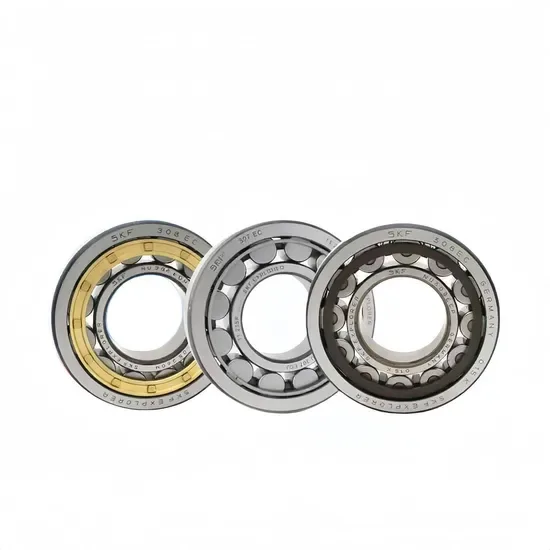
Description
Authorized Channel Sourcing — Every NNU4956BK/SPW33 shipped carries a traceable batch certificate linked to the manufacturer’s production records, ensuring the tapered bore and SP precision class match your spindle specifications before it leaves the warehouse.
Technical Specifications
| Parameter | Value |
|---|---|
| Designation | SKF NNU4956BK/SPW33 |
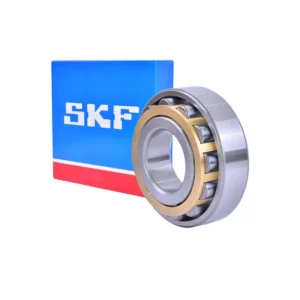
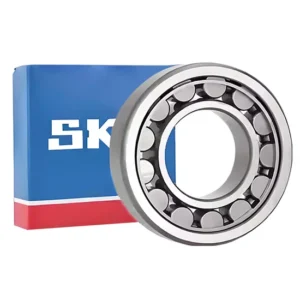
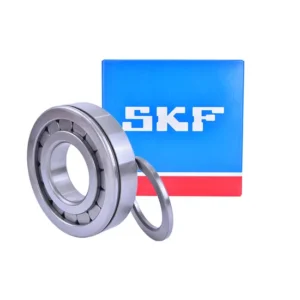
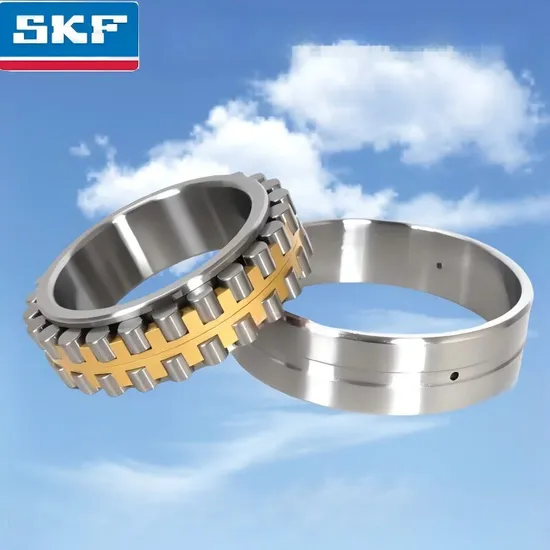
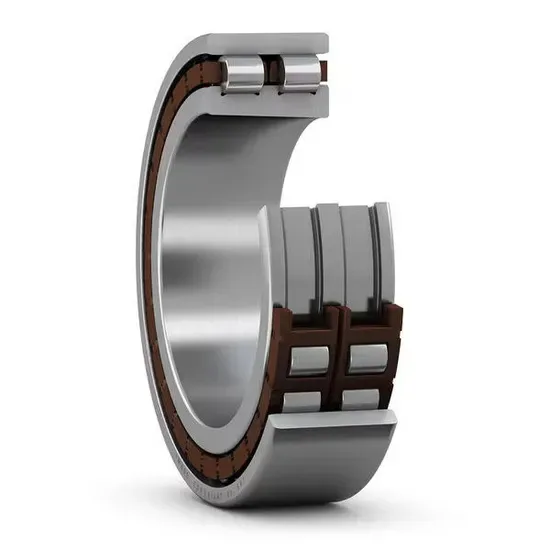
| Bearing Type | Double Row Cylindrical Roller Bearing |
| Bore Diameter (d) | 280 mm |
| Outside Diameter (D) | 380 mm |
| Weight | 32.1 kg |
| Number of Rows | Double Row |
| Seal or Shield Type | Open |
| Precision Class | SP |
| Bore Type | Tapered (1:12 taper) |
| Outer Ring Feature | W33 — Annular groove and three lubrication holes |
| Cage Material | Brass, window-type (B suffix) |
| Origin | China |
Cage material associated with the B suffix requires verification against the manufacturer’s current catalog for this specific production batch.
Application Suitability
| Industry | Typical Applications |
|---|---|
| Machine Tool Manufacturing | CNC spindle rear support / roll grinder wheel head |
| Steel & Metallurgy | Rolling mill work roll neck / continuous caster guide roll |
| Heavy Industrial Machinery | Precision gearbox intermediate shaft / large extruder screw support |
What Happens When a Spindle Bearing Fails Mid-Shift
A mismatch in precision class or bore taper geometry can destroy a week’s production in three shifts.
When we ordered NNU 4944 bearings for a roll grinder spindle years ago, the supplier matched the base number but shipped CN clearance with a cylindrical bore instead of the required C4 and tapered sleeve mount. The spindle overheated within hours and seized entirely, scrapping workpiece inventory and forcing an unplanned teardown. That same failure pattern repeats across heavy machining operations whenever procurement teams treat the base designation as sufficient [NEED_CITE: bearing selection errors causing thermal seizure in precision spindles]. The SKF NNU4956BK/SPW33 double row cylindrical roller bearing addresses this directly — the SP precision class and tapered bore are verified together as a matched system, not checked in isolation.
How the SP Class and Tapered Bore Work Together on Spindle Shafts
Spindle applications demand tight dimensional and running accuracy under continuous radial load. The SKF NNU4956BK/SPW33 double row cylindrical roller bearing meets this through its SP precision rating, which constrains both inner ring bore geometry and outer ring raceway runout beyond standard P5 tolerance. The 1:12 tapered bore allows controlled interference fit when driven onto a tapered shaft journal or adapter sleeve — the axial displacement during mounting sets the residual internal clearance precisely. I’ve seen maintenance crews assume any tapered bore bearing will seat correctly; the reality is that the drive-in distance must match the shaft taper and required operating clearance, or you get either a loose fit that frets or an over-pressed fit that eliminates clearance entirely.
Thermal Load, Lubrication Paths, and the W33 Feature
This bearing operates in environments where heat generation from rolling friction and external process temperatures combine to challenge lubrication stability. The W33 feature — an annular groove with three lubrication holes in the outer ring — allows grease or oil to reach the roller-raceway contact zone directly rather than relying on migration through the cage pockets. In rolling mill applications where ambient temperature rises significantly, this direct-feed path extends relubrication intervals and reduces the risk of lubricant starvation during sustained operation [NEED_CITE: outer ring lubrication groove effectiveness in cylindrical roller bearings under thermal load]. The open design means external sealing is the responsibility of the housing, which must account for coolant ingress or particulate contamination depending on the installation.
Reading the Suffix Stack: What Each Code Controls
The SP precision class governs running accuracy and dimensional tolerance — critical for spindle applications where runout translates directly into workpiece surface finish defects. The K and B suffixes both indicate the 1:12 tapered bore, enabling secure interference fit mounting with adjustable residual clearance through axial positioning on the taper. The W33 designation specifies the outer ring annular groove and three lubrication holes, providing a direct oil or grease feed path that bypasses the cage and reaches the loaded zone. The double row cylindrical arrangement delivers high radial rigidity with zero axial location capability — the bearing must be paired with a separate thrust or angular contact bearing to control axial position.
The Hidden Cost of Skipping Suffix Verification
Correct specification matched to application load and speed extends service life predictably. A bearing installed with wrong clearance class — standard CN where thermal expansion demands C3 or C4 — binds internally as operating temperature rises, generating accelerating heat until cage failure or raceway spalling occurs. Counterfeit bearings with soft inner rings and cloned markings pass visual inspection but lack the case-hardened raceway depth needed for the load spectrum, failing well short of the calculated L10 life. Per ISO 15243, these failures classify under material fatigue and geometric deviation [NEED_CITE: rolling bearing failure mode classification per ISO 15243]. Unplanned downtime from a seized spindle costs far more than the bearing itself when production schedules, scrap workpieces, and emergency teardown labor accumulate.
Why Maintenance Engineers Specify Through This Channel
Every bearing we ship is sourced through authorized distributor channels with full batch traceability — the Certificate of Conformity ties directly to the manufacturer’s production records. We verify each suffix combination against the application parameters you provide, checking that the SP precision class, tapered bore geometry, and W33 lubrication feature align with your shaft design and operating envelope. When cross-referencing from another brand’s designation, we match clearance, cage material, and precision together rather than substituting on base number alone. Country-of-origin documentation accompanies each shipment for import compliance, and our dimensional inspection records confirm bore taper and running accuracy before dispatch.
Documentation & Authenticity
- Supplier Certificate of Conformity with batch number linking to production records for this SP-precision bearing
- SKF official app QR code verification on packaging for field authenticity confirmation before mounting
- Third-party runout inspection report verifying inner ring bore taper geometry and outer ring raceway accuracy against SP class tolerance
- Material certificate confirming case-hardened raceway composition and heat treatment specification
- Country-of-origin documentation prepared for import customs clearance with correct HS code classification
Storage, Handling & Mounting
- Keep the tapered bore bearing in original sealed packaging until mounting — premature exposure risks corrosion on the precision-ground 1:12 taper surface that compromises interference fit quality
- Store horizontally on a flat surface; at 32.1 kg, edge-standing risks cage distortion and raceway brinelling from concentrated contact stress
- During mounting on a tapered shaft journal, measure axial drive-in distance against the required residual clearance specification — under-driving leaves a loose fit that frets, over-driving eliminates clearance and causes thermal binding within the first shift
- The W33 lubrication holes in the outer ring must align with the housing grease feed port during installation; misalignment blocks lubricant flow and starves the loaded roller zone
- Open-type bearing requires clean gloves during handling — fingerprints on exposed raceways introduce chloride contamination that initiates corrosion pitting before first operation
Request Technical Documentation and Cross-Reference Verification
Share your spindle or gearbox application parameters — load spectrum, operating speed range, and thermal envelope — so we can confirm the SP precision class and tapered bore mounting match your shaft design. If you’re replacing an existing bearing from another brand, provide the OEM equipment number or current designation for a complete cross-reference check including clearance and cage alignment. We’ll confirm batch availability, lead time, and include the full documentation package with your quotation.
Frequently Asked Questions
Q: How do I verify the authenticity of the NNU4956BK/SPW33 after delivery?
A: Each bearing ships in packaging marked with a QR code scannable through the SKF official app, which returns the production batch record and manufacturing facility details. We also provide a Certificate of Conformity with batch traceability that ties directly to the authorized distributor chain.
Q: What is the difference between SP and UP precision class for spindle applications?
A: Both SP and UP are super-precision classes exceeding standard P4 tolerance. UP imposes tighter constraints on running accuracy and dimensional variation — typically selected for ultra-high-speed spindles where minimal runout is critical. SP provides the accuracy level required for most heavy-duty precision spindles and gearbox shafts.
Q: How should the tapered bore be mounted on the shaft?
A: The 1:12 tapered bore seats onto a matching tapered shaft journal or adapter sleeve. The axial drive-in distance during mounting controls the residual internal clearance — this must be calculated based on the shaft taper geometry and the operating thermal expansion expected in service.
Q: What benefit does the W33 lubrication feature provide?
A: The annular groove and three lubrication holes in the outer ring deliver grease or oil directly to the roller-raceway contact zone. This improves lubricant distribution under load and extends relubrication intervals compared to relying on migration through cage pockets alone.
Q: Can this bearing handle axial loads?
A: No. The double row cylindrical roller design carries high radial loads but has zero axial location capability. A separate thrust bearing or angular contact bearing must be installed to control axial shaft position.
Secure Your SKF NNU4956BK/SPW33 Double Row Cylindrical Roller Bearing
Send your application parameters or OEM equipment number to receive a verified specification match with full documentation and batch availability confirmation.